
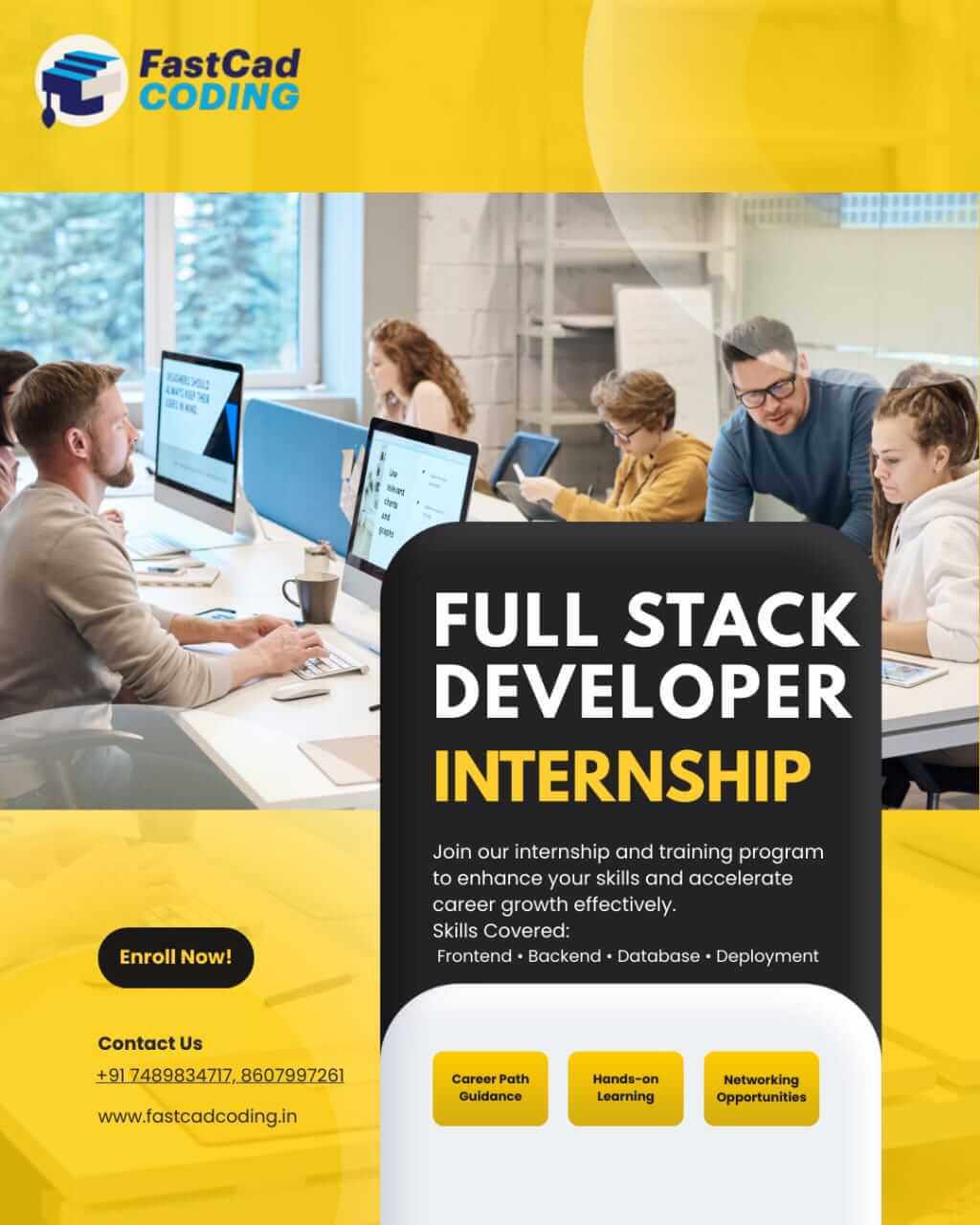
Whether you’re taking your very first step into the world of coding or you’re an experienced developer looking to master the latest technologies, there is a path designed for you. The landscape of web development education has evolved to offer a comprehensive range of courses catering to all skill levels. From foundational introductions to advanced specializations, the right program can turn your ambition into expertise.
Why Pursue Web development Courses? Your Gateway to Tech Success
The demand for skilled web developers has never been higher and continues to grow at a rapid pace. Businesses across every sector, from retail and finance to healthcare and entertainment, require a strong online presence to connect with their customers and operate efficiently. This universal need translates into a robust and expanding job market. Companies are constantly seeking professionals who can build and maintain secure, user-friendly, and powerful web applications. A structured web development courses is your direct route into this thriving tech industry. Want a website for your Business visit here.
A career in web development is not only in high demand but is also financially rewarding. With average salaries for web developers in the U.S. clustering around $90,000-$95,000, and total compensation often exceeding $110,000, the field offers significant earning potential. Experienced senior developers can command even higher salaries, often reaching $174,000 or more, especially in major tech hubs. This potential for growth, combined with the high demand, makes web developer training a smart investment in your financial future.
Beyond the numbers, a career in web development offers unparalleled flexibility and a culture of continuous innovation. The rise of remote work has made it possible for developers to work from anywhere in the world, providing a work-life balance that few other professions can match. It’s a field that rewards creativity and problem-solving, allowing you to work on diverse projects that can have a real-world impact. By enrolling in one of the many available dev courses, you gain the foundational knowledge of modern programming languages and frameworks essential to building a successful and fulfilling career in the digital economy.
Comprehensive Website Development Course Curriculum
A high-quality website development course provides a structured curriculum designed to take you from foundational concepts to building complex, real-world applications. These programs are meticulously crafted to cover the core components of modern web development, ensuring you gain a holistic understanding of how the web works. The curriculum is built around the coding fundamentals that every developer needs, establishing a strong base of knowledge that you can build upon throughout your career.
Course content is constantly updated to reflect current industry standards and employer expectations. You will learn the tools, technologies, and best practices that professionals are using today. Upon completion of a comprehensive web development courses, you will have gained expertise in key areas such as front-end user interface design, back-end server logic, database management, and application deployment, making you a well-rounded and job-ready candidate.
Front-End Essentials: Crafting User Interfaces
The front-end is everything a user sees and interacts with in their browser. This journey begins with the three foundational languages of the web: HTML for structure, CSS for styling, and JavaScript for interactivity. A thorough curriculum ensures you master these essentials, learning how to create well-organized, visually appealing, and dynamic web pages. These languages are the bedrock upon which all modern websites are built.
In today’s multi-device world, it’s crucial that websites look and function perfectly on any screen size. You’ll dive deep into the principles of responsive design, ensuring your creations are just as usable on a smartphone as they are on a desktop monitor. Cross-browser compatibility is another key focus, teaching you how to deliver a consistent experience for all users, regardless of how they access your site. Strong programs also introduce the core principles of user experience (UX) and user interface (UI) design, helping you build applications that are not just functional but also intuitive and enjoyable to use.
To build modern, efficient, and scalable user interfaces, developers rely on powerful frameworks and libraries. Your coursework will introduce you to the most popular front-end tools in the industry, such as React, which remains a dominant force in the market. You’ll learn how to leverage these frameworks to build complex, single-page applications with reusable components, speeding up development and improving maintainability.
Back-End Power: Server-Side Logic and Databases
If the front-end is what the user sees, the back-end is the engine that powers it all. This part of the curriculum covers server-side programming, where you’ll learn languages that handle data processing, user authentication, and business logic. Popular and powerful languages covered in these courses often include Python, JavaScript (with Node.js), and Go, all of which are highly sought after by employers. You’ll learn how to build the robust server infrastructure that supports the user-facing side of a web application.
Web applications run on data. A critical component of back-end development is understanding how to store, retrieve, and manage information effectively. You will learn about different types of database management systems, including relational databases using SQL and non-relational NoSQL databases like MongoDB. The curriculum will cover data modeling, which is the process of designing how data is organized, a fundamental skill for building scalable and efficient applications.
For different parts of an application—or different applications altogether—to communicate, they need a bridge. This is where Application Programming Interfaces (APIs) come in. You’ll learn how to design, build, and integrate APIs, allowing for a seamless flow of data between the front-end and back-end, or between your application and third-party services. With data transfer comes responsibility, so a major focus will be on security best practices, teaching you how to protect your application and its users from common vulnerabilities.
Building Dynamic Web Applications
This is where front-end and back-end skills converge to create complex, interactive web applications. You will learn the complete development lifecycle, from initial concept to a fully functional product. This involves integrating the user interface you’ve crafted with the server-side logic and database you’ve built, resulting in a dynamic application that can handle user input, process data, and deliver personalized content.
Modern web development relies on a rich ecosystem of tools and a collaborative workflow. You will become proficient with essential development tools and environments, including code editors like VS Code and version control systems like Git. Learning Git is non-negotiable in a team setting, as it allows developers to track changes, collaborate on code, and manage different versions of a project without conflicts. This is a standard skill required in virtually all professional development roles.
Finally, an application isn’t complete until it’s accessible to the world. The curriculum covers deployment strategies, teaching you how to take your finished code and launch it on a live server. You’ll learn about cloud platforms and hosting services, as well as the process for maintaining and updating your application after it goes live. By the end of this module, you’ll have the skills to build and manage scalable web solutions from start to finish.
| Course | Best For | Duration |
|---|---|---|
| Front-End | Beginners | 3 Months |
| Full Stack | Job Seekers | 6 Months |
| MERN Stack | Developers | 4 Months |
Looking for web Development Internships check here:
Flexible Online Web Development Courses and Certification Paths
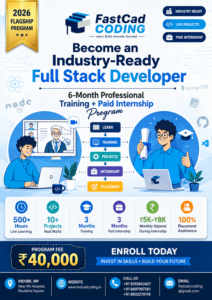
The rise of remote learning has made education more accessible than ever, and online web development courses are at the forefront of this revolution. One of the greatest benefits of learning online is the flexibility it offers. You can study from anywhere in the world, fitting your coursework around your existing job, family, or personal commitments. This accessibility removes geographical barriers and allows you to learn from top instructors and institutions without having to relocate.
Online learning caters to diverse needs with a variety of formats. You can choose from self-paced modules that allow you to learn on your own schedule or join live online classes for a more structured, instructor-led experience. Regardless of the format, the emphasis is always on practical application. A quality web development course online will be packed with hands-on projects and assignments that challenge you to apply what you’ve learned, ensuring you build not just knowledge, but tangible skills.
Exploring Free Web Development Courses
For those just starting their coding journey or experienced developers looking to refresh a specific skill, free web development courses offer incredible value. They are a perfect, risk-free way to determine if a career in web development is the right fit for you before committing to a paid program. Free resources are also excellent for learning a new programming language or framework to add to your existing toolkit.
There is a wealth of high-quality free content available from reputable platforms. Organizations like freeCodeCamp, The Odin Project, and MDN Web Docs provide comprehensive, project-based curriculums that can take you from beginner to job-ready. Other platforms like Coursera, Codecademy, and even YouTube offer a vast library of free courses and tutorials covering foundational topics such as HTML, CSS, JavaScript, and introductions to popular frameworks.
The Value of Certified Web Developer Classes
In a competitive job market, a certificate from a reputable program serves as a powerful validation of your skills. It provides employers with a clear signal that you have undergone rigorous training and have mastered a specific set of industry-relevant competencies. This professional credibility can significantly enhance your resume and set you apart from self-taught candidates who may not have a formal credential to showcase their expertise.
Certificates come in various forms, each serving a different purpose. A certificate of completion shows you’ve finished a course, while professional or specialized certificates often require passing a rigorous exam to prove your proficiency in a specific technology, like an AWS certification for cloud development. Pursuing web development courses online with certificate options adds a layer of verification that hiring managers value.
The career advantages are clear. Certified developers often have better job prospects and can command higher salaries. A certificate can make it easier to enter the job market, especially for those changing careers, by providing the credentials needed to get past initial screening processes. By choosing accredited web developer classes from respected institutions or platforms, you are making a strategic investment in your long-term career growth.
Choosing the Best Web Development Program for Your Future
Selecting the right program is a critical step in your journey. To find the best web development courses for your needs, start by creating a checklist of key factors. Consider the curriculum’s depth and its focus on modern technologies. Look at the program’s structure, student support systems, and what kind of career services are offered. A thorough comparison will help you identify the program that best aligns with your goals.
Before enrolling, perform a self-assessment of your personal circumstances. How much time can you realistically commit each week? What is your budget? Do you thrive in a self-paced environment, or do you need the structure of a live classroom? Answering these questions
The quality of a program often comes down to its people. Research the instructors’ qualifications and their real-world industry experience. Look for student testimonials, reviews, and success stories to get a sense of the outcomes you can expect. Furthermore, evaluate the support systems in place. Does the program offer mentorship from industry professionals? Is there an active and helpful student community? Does it provide career services like resume building, portfolio reviews, and interview preparation? These support structures can be just as valuable as the curriculum itself.
Finally, understand the different types of web development courses available. Coding bootcamps are intensive, short-term programs designed for rapid skill acquisition and career changes, typically lasting a few months. University courses or certificate programs offer a more traditional academic approach, often blending theory with practice over a longer period. Online platforms provide immense flexibility with a wide range of self-paced courses. Each format has its pros and cons, and the best choice depends entirely on your individual goals, budget, and learning preferences.
FAQ’s
1. Which web development course is best for beginners?
If you’re new to programming, start with a course that covers HTML, CSS, JavaScript, and responsive web design. Once you’ve mastered the basics, you can progress to frameworks like React and back-end technologies such as Node.js and MongoDB.
2. How long does it take to web development courses?
The learning timeline depends on your goals and study schedule. Most beginners can learn front-end development in 3–4 months, while becoming a full-stack developer typically takes 6–12 months with consistent practice and project work.
3. Do I need a degree to become a web developer?
No. Many successful web developers build their careers through online courses, coding bootcamps, certifications, and practical projects. Employers generally value your skills and portfolio more than a formal degree.
4. Which programming languages should I learn for web development courses?
Every web developer should learn HTML, CSS, and JavaScript. For back-end development, popular languages include Node.js, Python, PHP, and Java. Learning frameworks like React and Express.js can also improve your job prospects.
5. Are online web development courses worth it?
Yes. High-quality online courses provide flexibility, hands-on projects, industry-relevant skills, and certifications. They are an excellent option for students, working professionals, and career changers.
Ready to Launch Your Career? Enroll in a Course Today!
At Fastcad Coding, our web development curriculum is designed around real client projects, helping students gain practical experience with modern frameworks and deployment workflows.
The journey to a rewarding career in tech begins with a single step. By starting a web development courses now, you are investing in a skill set that is in high demand across the globe. You can immediately begin building tangible projects, developing your professional network, and moving closer to your career goals. Don’t wait for the perfect moment—the perfect moment is now.
Take the next step and transform your career. We encourage you to explore the available web development courses and find the program that ignites your passion for building and creating. A future-proof career in technology is within your reach, and it all starts with the decision to enroll. Sign up for your classes and start coding your new future today.
To make your decision easier, you can browse our detailed course catalogs to compare curriculums and outcomes. Consider attending a virtual info session to meet instructors and ask questions directly. Our advisors are also available to help you map out your educational journey and choose the path that’s right for you. Explore our flexible payment plans designed to make your education affordable.
New cohorts are forming now, so be sure to check for upcoming start dates and enrollment deadlines to secure your spot.
Leave a Reply