
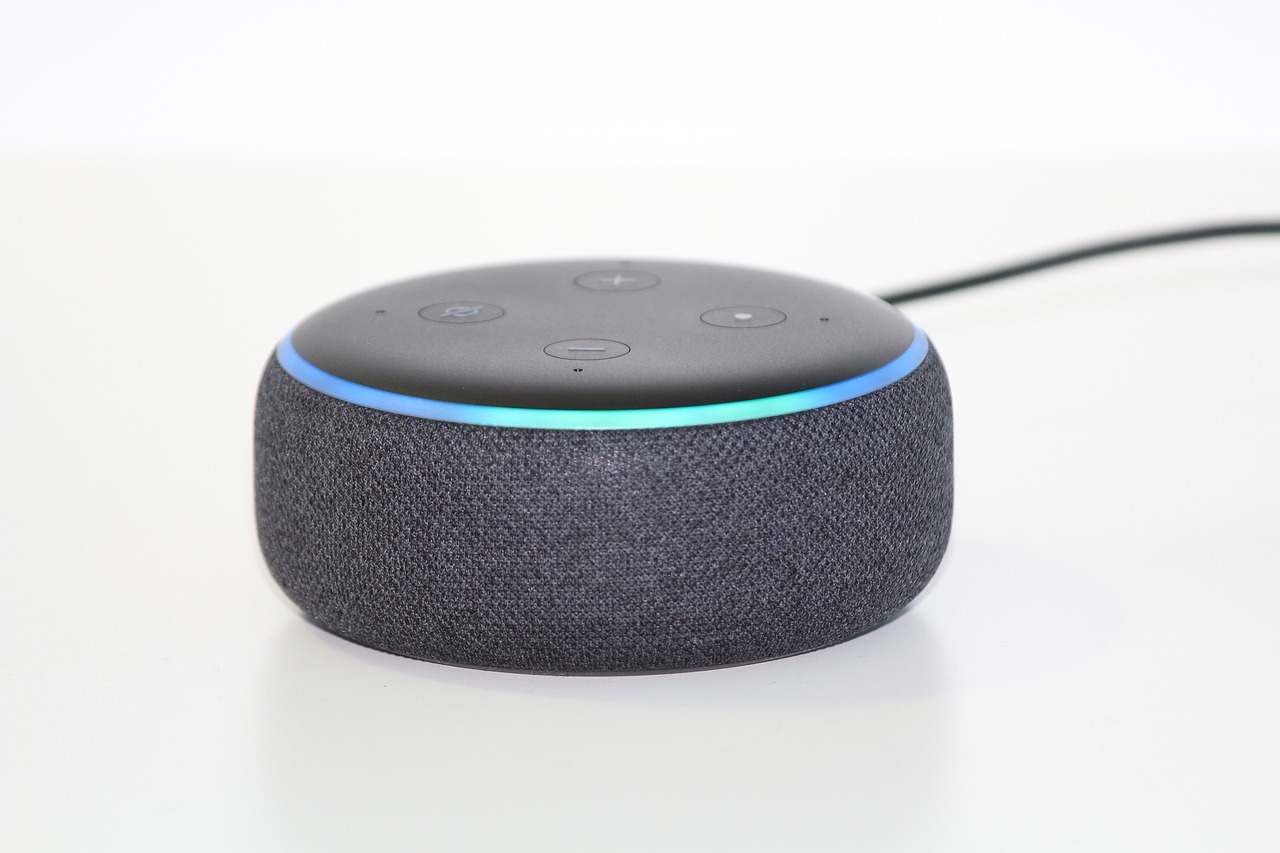
Imagine returning home after a long day; as you walk in, a friendly voice says, “Welcome home! Shall I turn on the lights?” Sounds straight out of that sci-fi movie, right? Well, pretty much thanks to Alexa, this is close to reality today. Alexa is sort of Amazon’s voice-controlled virtual assistant, like your friendly neighborhood helper, who knows everything from what the weather’s going to be outside to your favorite playlist and can even order pizza by command.
But how does Alexa precisely work? What is the technology working behind this charming chatty assistant? And, more importantly, with recent technological advancement, how does Alexa evolve? Take a seat, sip coffee, and get into the detailed world of Alexa-creation, AI magic, and what would be coming next in Alexa 2.0.
Making Alexa: The Birth of a Smart Assistant
Now, about Alexa’s origin story-no capes, no superpowers, but cool all the same. Alexa was born in the year 2014, developed by Amazon in their ambitious plans to integrate voice technology into our everyday life. Alexa gets her name from the ancient library of Alexandria-a symbol of knowledge-designed to be the all-knowing assistant for your home.
But in itself, Alexa resides inside the raft of microphones, speakers, and most importantly, the cloud-based software ingrained within Amazon’s Echo devices. The real magic occurs within AWS, where Alexa lives. She is not just this cute speaker with a voice; she’s plugged into the huge cloud computing network which processes your requests in real time. The genius behind that is Natural Language Processing, or NLP in short form, which will be discussed more in detail later.
Alexa’s development brought together cutting-edge technologies such as voice recognition, machine learning, and cloud computing. She was developed by Amazon engineers to know how to handle natural language, answer complicated questions, and even improve over time. Thus, Alexa, starting from being a simple assistant who could do basic things in the house, constantly improved with updates and the continuous advancement of artificial intelligence.
How Alexa Works: The Magic of Voice Recognition and Natural Language Processing
You: “Alexa, what’s the weather today?”
Alexa: “The weather today is sunny, with a high of 75 degrees.”
All this magic is enabled by two major technologies: Voice Recognition and Natural Language Processing, or NLP in abbreviation. Let’s break them down:
Voice Recognition
When you say, “Alexa,” the device picks up through its array of microphones-the wake word, which might be Alexa, or Echo, or Computer, or whatever you set them to. These microphones are designed to listen from any direction and detect speech even in noisy environments.
When the device recognizes one of the wake words, Alexa records your voice command and sends it to the cloud-where the magic really happens. Here, ASR, or Automatic Speech Recognition, converts your spoken words into text. ASR is complex technology, but basically it breaks down your speech into smaller bits, phonemes, which through some advanced algorithms find a near match for those phonemes to known words. Think of Alexa playing an evolved, high-speed game of Scrabble, except instead of letters she’s listening to sounds.
Natural Language Processing
Once Alexa recognizes what you said, the big problem of understanding what you meant. Enter NLP. In this step, Alexa is going to make sense of your query and decide what to do as a result. Say, if you ask her about the weather, Alexa won’t search for keywords like “weather” and “today.” She perceives the sentence as a whole and grasps your intent-to provide the weather forecast.
NLP encompasses intricate models of context, syntax, and semantics. For example, when you say, “Alexa, play some music,” she knows you want her to start playing your favorite tunes, not to utter the meaning of the word music. Alexa is consistently learning about your preferences over time, enabling her to personalize responses and actions more effectively with her enhanced NLP.
Read all about apple AI here.
Artificial Intelligence in Alexa: The Brain Behind the Voice
If Voice Recognition and NLP are her ears and mouth, then AI is her brain. All this enables Alexa continuously over time to learn, adapt, and get smarter. Now, let me go a little in-depth in terms of the role of AI in Alexa.
Machine Learning more
ML stands for the core of Alexa’s intelligence, which learns every time you interact with her. She monitors patterns in your commands and, over time, will get better at guessing what you want from her. If you ask her more frequently about the weather, it might trigger Alexa to include telling you the weather as a part of your morning routine.
With ML, Alexa is able to do even cooler things: control smart home devices, playing playlists of songs for a particular mood, or even ordering groceries. This tech fine-tunes her over time through data analytics from millions of users around the globe and makes her smarter and quicker in her responses.
AI-Powered Voice Interaction more
Alexa is more voice-interaction-just a voice asking and answering in robotic style. AI helps her understand your feelings, the subtlety in the tone of your voice, and even recognizes the accent. For example, if you say to Alexa, “Alexa, I’m having a terrible day,” she may immediately soothe you with an answer: “I’m sorry to hear that; shall I play some nice soothing music for you?” AI makes Alexa more conversational; thus, the interaction is felt less machinelike and more human.
This conversational intelligence is powered by Deep Learning algorithms developed at Amazon. Deep learning models, which are based on the neural networks in the human brain, are what drive Alexa’s ability to process and respond in natural ways.
How AI in Alexa is Evolving: Upcoming Technologies Changing Alexa
Alexa is evolving day by day, and the main reason behind that is the incredible speed with which AI technology advances. Let’s take a look at the influence of new technologies on the future of Alexa.
Contextual Understanding
The most exciting point in developments in AI is the fact that Alexa now has an ability to understand more context. In the near future, Alexa will be able to understand multi-turn, more complex conversations. Instead of answering only one question at a time, she will be able to have longer and more meaningful conversations. Let me show this to you: for example, if you say, “Alexa, what’s the weather like in New York?
” followed by, “And what about tomorrow?
” Here, Alexa will understand that you are still referring to the New York weather for the following day, and she will not need you to mention the location again.
Emotion Detection
Alexa is also becoming more attuned to recognizing emotions. The company’s been working on letting Alexa know when you’re happy, sad, or stressed. It’s emotional intelligence that will allow Alexa to behave in even more empathetic ways. Imagine coming home and saying, “Alexa, I had a bad day,” and she says, “Ah, sorry to hear that. Would you like to listen to some relaxing music or hear a joke?”
Natural Conversations
It’s making Alexa sound less scripted and more conversational with AI improvements. Amazon is working on models that can generate more human-like speech patterns, so you feel more like you are talking to a real person rather than a machine. This is all done in the pursuit of having fluid, smooth conversations: fewer ‘uh’s, less pausing, and responses that are intuitive.
But Amazon doesn’t sit on its laurels, and with Alexa 2.0, some pretty cool features and technologies are underway to take this whole virtual assistant experience to another level altogether. Here’s what you can expect:
Smart Home Integration ENHANCED
Alexa 2.0 will integrate even more seamlessly with smart home devices. More devices will be voice-controlled, and the interactions with those devices will be more seamless. If you were to say, “Goodnight,” for instance, Alexa might lower the lights and then play soothing music automatically.
Better Multitasking
Alexa 2.0 will be even more capable of multitasking. At one time, you may ask Alexa to set a timer for your pasta, play your favorite cooking playlist, and read you a recipe all at once. Alexa’s future will find even more natural ways to do many things at once.
Local AI Processing
Currently, most of the processing Alexa does is in the cloud. However, with Alexa 2.0, she will process more things locally with AI. This means she can do certain things faster and a bit more securely since she wouldn’t have to upload your data to the cloud.
Enhanced Language Support
Alexa 2.0 will support more multiple languages and accents, thereby being more accessible to an international audience. Amazon is working on models that can switch languages in real-time, allowing users to interact with Alexa in multiple languages in a single conversation. MORE PERSONALIZED EXPERIENCES Alexa 2.0 will be even more personalized with more advanced AI. She will understand more about your tastes and how you use her, personalize responses and suggestions directed toward you. For instance, Alexa could suggest a playlist similar to your listening patterns or remind you of an upcoming meeting based on your calendar.
How Technology Powers Alexa: Cloud Computing, NLP, and Machine Learning (Continuation)
As I’ve said, Natural Language Processing forms the backbone of Alexa, making her “smart” enough to understand you and respond in a way that will feel natural. Using NLP, Alexa breaks down human language, interprets the meaning of your words, and does something about it. It is the perfect blend of linguistics, computer science, and AI working together in trying to make sense of subtleties in human speech, like accent variations, colloquial usages, and even slang!
But how exactly is Alexa’s inside NLP? Let’s break it down:
Speech to Text: First and foremost, when speaking with Alexa, Speech Recognition occurs. This is the very process of turning your voice into text, like how your phone auto-corrects texts, but much more sophisticated.
Natural Language Processing: Once your speech is converted to text, a number of algorithms in the process of NLP turn your words into meaningful bits. Here is where Alexa identifies your intent behind that command. Suppose you say, “Alexa, turn on the lights.” NLP doesn’t just catch the “lights” and “on” but understands that you want to interact with a smart light device in your home.
Action Response: Once Alexa identifies what is being requested, it sends the proper command to the device, application, or cloud service. Here, Alexa sends the “turn on” message to the smart light that is connected to it.
Machine Learning (ML): Alexa’s Increasing Intelligence
Yet another most important feature of Alexa is machine learning. With ML, Alexa improves with time. She gets better at knowing your preferences, when you want your lights dimmed, and what kind of music to play during dinner.
Alexa’s machine learning goes on in the cloud, where she continuously learns from millions of interactions with users. Amazon has an immense repository of interactions to adapt, learn, and improve upon. Think of it like teaching Alexa, as one interacts more and more with her, she becomes more aware of your habits, preferences, and even learns to understand the sound of your voice. This helps Alexa be more accurate with time and responsive to you.
For instance, after some days of commanding, “Alexa, play some relaxing music,” Alexa might just play your favorite playlist of calming songs without you asking explicitly for it. She remembers and adapts.
The Future of Alexa: How Emerging Technology Is Changing Alexa’s Abilities
Alexa gets smarter quicker than ever, with improvements in both AI and cloud computing. Emerging features of technology that will shape the future for Alexa include the following key features in Amazon’s vision to make Alexa smarter, more intuitive, and deeply integrated into our lives:
Improved Conversational AI
The biggest enhancements to come would be with Conversational AI. While Alexa can have basic, straightforward conversations today, Alexa in the future would be able to converse on a deeper level and with more context.
It would allow Alexa to handle follow-up questions and retain more context between conversations. Think of being able to ask, “Alexa, what’s the weather in New York tomorrow?” followed by, “What about Friday?” without having to tell Alexa what city you’re talking about. The goal, according to Rohit Prasad, vice president and head scientist at Alexa, is for Alexa to remember context better and offer more fluid, natural conversations-almost as if talking to a human.
Technology Focused on Privacy
We can see that with the increase in Alexa’s integration into everyday life, there come increased concerns about data privacy. Amazon is working on on-device processing whereby Alexa performs certain actions on the device without sending data to the cloud, thus guaranteeing quicker responses and safer interactions.
For instance, local commands, like switching on and off smart lights or even just changing your thermostat setting, will execute totally on your device for low latency and great privacy.
5G Integration
With Alexa, when 5G networks go live, she is even more responsive to such real-time processing of data. Higher speeds and lower latency levels indicate that Alexa can perform tasks that are more complex in nature much sooner, thus making the process smoother and quicker. Think of downloading large volumes of data or streaming high-quality video through Alexa-controlled devices.
AI-Driven Personalization
Future enhancement in AI will make Alexa even more personalized. Alexa will improve at learning your schedule, preferences, and even your mood. With the use of machine learning algorithms, Alexa will know, one day, when you would want certain actions to take place. Perhaps Alexa will offer to dim the lights and play soothing music when she recognizes it is near bedtime-without you having to say one word.
It has also brought this level of personalization into voice recognition. Alexa, very soon, would be able to recognize multiple voices in a household. She would customize the responses for each person. So, if you and your roommate ask for a playlist, Alexa will know to play your genre.
Alexa 2.0: The Next Big Leap
The next big iteration of Alexa-technically known as Alexa 2.0-promises a slew of exciting advancements that will make the virtual assistant even more utilitarian and versatile. Here is what you can expect in the near future:
Deeper Integration with Wearable Devices
Meanwhile, Amazon has also been working on Alexa 2.0, making integrations seamless with wearables such as smartwatches, glasses, or even a fitness band. Think of Alexa being able to monitor your health metrics through a fitness band and giving you daily summaries or reminding you to drink water or take a break.
Alexa will also integrate with augmented reality glasses to enable you to interact with her in a completely new way-perhaps even in some sort of futuristic Iron-Man style display that projects information in front of your eyes.
Smart Home Orchestration
Alexa 2.0 won’t be about just turning the lights on and off. The future is smart home orchestration where Alexa can manipulate multiple devices all in one go. You could say for example, “Alexa, I’m leaving,” and she’ll lock the doors, switch off the lights, lower the thermostat, and fire up your security cameras all at once.
This level of orchestration will also extend to things like routines, such as your morning routine, whereby Alexa opens the curtains, turns on your coffee maker, and reads your schedule-all based on your saying only, “Good morning.”
Voice-Based Shopping and Financial Services
Other integrations expected with Alexa 2.0 include deeper integrations with voice commerce and, for that matter, financial services. Alexa would guide one through finding the best deals to tracking orders and, where relevant, managing returns-just by voice.
Alexa could check on your bank balance, transfer money, or set up bill payments just by your voice command, using secure AI and blockchain technology integration for financial services.
Alexa Evolved: How AI, NLP, and Machine Learning Feature in Amazon Alexa 2.0
The move from Alexa 1.0 to Alexa 2.0 has been representative of an exponential growth curve for Artificial Intelligence, Natural Language Processing, and Machine Learning technologies. Here’s how these components drive Alexa to the next level:
Natural conversations with AI and NLP
Alexa 2.0 will be able to handle more organic, conversational interactions. She would, through AI algorithms, understand multi-turn dialogues. That means she’d be better at catching back-and-forth conversations.
For example, instead of having one command answered at a time, Alexa 2.0 could follow a more organic flow:
“Alexa, what’s today’s weather?”
“It’s 75 degrees and sunny.”
“Should I take an umbrella?”
“There’s no rain in the forecast over the next two days.”
That fluid ability to converse will feel much more intuitive and human-like because deeper NLP models will understand contexts and intent beyond a single command.
Smarter AI-Driven Recommendations
Alexa 2.0 shall house AI that shall employ behavioral analysis to make smarter recommendations. Think of it like your personal assistant, which doesn’t just perform tasks but tries to anticipate your needs. A good example is how you order groceries every Sunday morning. Alexa will ask you proactively if you want to reorder your last list. She can perform complex routines, such as “Alexa, reorder everything I bought last weekend, except bread.”
Conclusion: The Future is Alexa Powered
Alexa has come a long, long way from her birth in 2014. With improvements in AI, machine learning, NLP, and, importantly, cloud computing, Alexa is no longer restricted to being just a voice assistant playing music or answering bits of trivia. She is becoming an indispensable part of smart homes, a personal assistant, and a conversational partner.
With Alexa unfurling into version 2.0 and beyond, the integration of many impending technologies like 5G, emotion detection, and AI-powered personalization is likely to make Alexa even more sophisticated, intuitive, and delightful. Be you a gadget-savvy teenager or a busy smart home manager, with Alexa, things can just get bigger-and the future looks absolutely thrilling!
Leave a Reply