
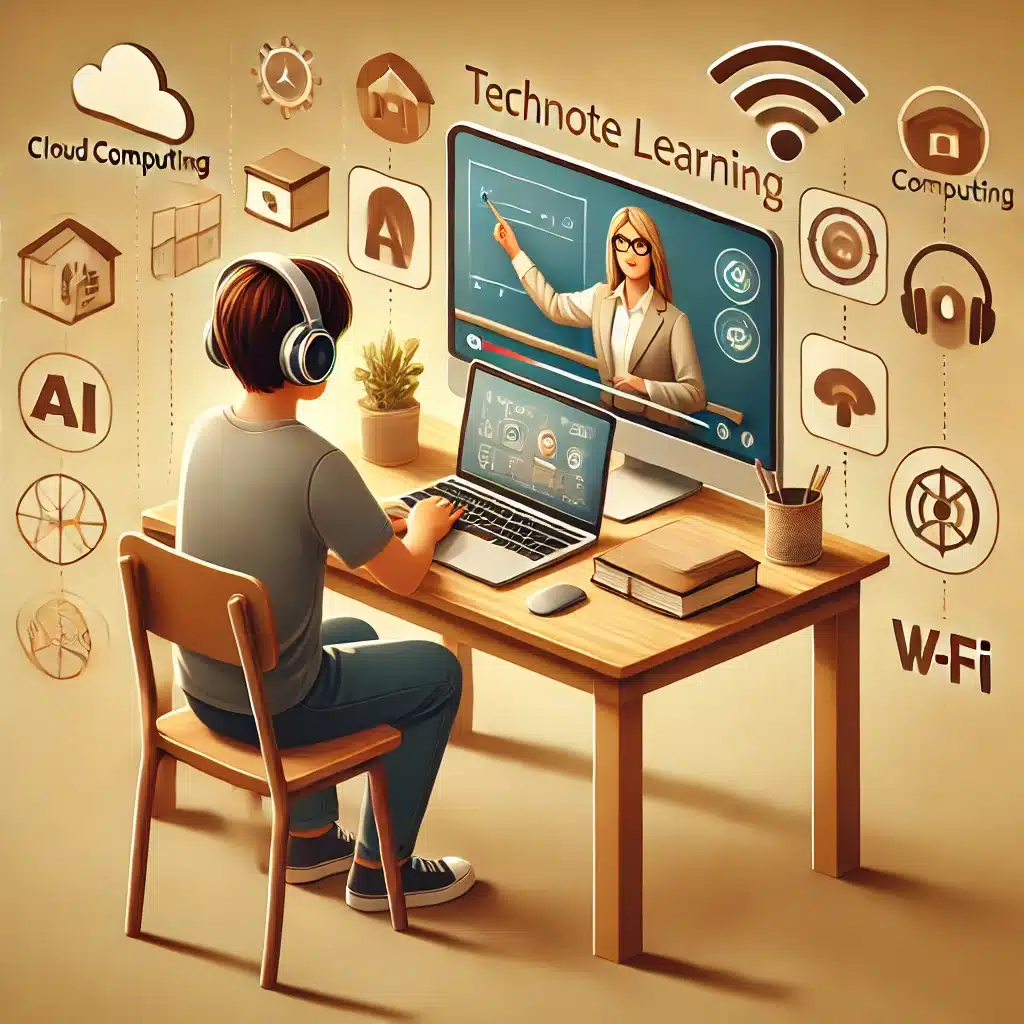
Let’s start with a little imagination. Picture a 15-year-old student in a small village in India, a young woman in her 20s working a full-time job in New York, and a 40-something entrepreneur in London—all sitting in their homes, sipping coffee, and attending the same online class about artificial intelligence. Sounds futuristic, right? Nope, it’s today’s reality, thanks to technology and its magical ability to bring people, knowledge, and opportunities together as Remote Learning.
Remote learning has broken down barriers we didn’t even realize were there. Whether you’re a student, a working professional, or someone with a lifelong love for learning, the ability of technology to make education accessible from anywhere is a game-changer. And honestly, this isn’t just a trend; it’s the future.
In this blog, we’ll dive deep into how technology makes remote learning possible. We’ll explore its features, how it impacts people of different age groups, the tools you can use, the challenges it faces, and its exciting future. Let’s make this journey fun, relatable, and full of aha moments!
Read more: Low code OR Now code development.
What Makes Remote Learning Possible? The Heart of Technology
Let’s give credit where it’s due: the internet. It’s the superhero in this story, the invisible force that connects classrooms across continents, unites learners with educators, and transforms living rooms into lecture halls. Without the internet, remote learning wouldn’t just struggle—it wouldn’t exist. But the internet doesn’t act alone; it’s part of a team of technologies and tools that make remote learning a reality.
First, let’s talk about the tools that facilitate real-time communication. Video conferencing platforms like Zoom, Microsoft Teams, and Google Meet have become household names. These platforms allow students and teachers to interact face-to-face, even if they’re thousands of miles apart. But beyond live interactions, we also have Learning Management Systems (LMS) like Moodle, Blackboard, and Canvas. These systems provide a centralized space for assignments, resources, quizzes, and forums, essentially acting as a virtual campus.
Educational platforms like Khan Academy, Udemy, Coursera, and edX have taken the concept even further by offering pre-recorded lessons, interactive quizzes, and certification programs. They don’t just replicate traditional classrooms; they expand them. A high school student can take a college-level course in astrophysics, and a working professional can master graphic design—all from the same platform.
Behind the scenes, technologies like cloud computing, artificial intelligence (AI), and 5G ensure everything runs smoothly. Cloud computing allows platforms to store massive amounts of data and make it accessible from anywhere. AI provides personalized learning experiences by recommending content based on a student’s progress. And let’s not forget 5G, which eliminates buffering and lag, making live classes and streaming seamless. Imagine attending a live coding class without any interruptions or downloading a large video lesson in seconds. That’s the magic of modern technology.
In short, remote learning is not just a product of one invention; it’s the result of a symphony of innovations working together to make education accessible, efficient, and engaging.
How Technology Adapts to Learners of All Ages
One of the most remarkable things about remote learning is its adaptability. Unlike traditional classrooms, where the curriculum and pace are often rigid, remote learning platforms cater to a diverse audience—from schoolchildren to retirees. This adaptability is what makes remote learning so impactful.
For younger students, gamified learning apps like Byju’s, Duolingo, FastCad Coding and ABCmouse turn studying into a fun adventure. These apps use interactive lessons, colorful animations, and rewards systems to keep kids engaged. A math problem isn’t just a question to solve; it’s a puzzle that unlocks the next level of a game. This approach taps into children’s natural curiosity and love for play, making learning enjoyable.
Teenagers and young adults benefit from platforms like Khan Academy, which offer structured courses on subjects ranging from algebra to art history. These platforms often include practice exercises, video tutorials, and progress tracking, allowing students to learn at their own pace. For high schoolers preparing for exams, resources like SAT prep courses or coding bootcamps provide targeted training that fits their schedules.
Working professionals and lifelong learners have their own set of needs, and technology rises to the challenge. Platforms like LinkedIn Learning, Coursera, and Udemy offer flexible courses that can be completed during lunch breaks or after work hours. These courses are often focused on skill development, such as mastering Python, learning project management, or understanding digital marketing. The flexibility of these platforms ensures that learning doesn’t interfere with other responsibilities.
Even seniors are jumping on the remote learning bandwagon. Platforms like GetSetUp and Senior Planet offer courses specifically designed for older adults, covering topics like digital literacy, fitness, and even art classes. Technology ensures that learning truly has no age limit.
The secret sauce here is customization. Remote learning platforms understand that one size doesn’t fit all. By offering diverse formats, paces, and subjects, they ensure that every learner finds something that suits them perfectly.
Breaking Geographical Barriers: Learning Without Borders
Remote learning has turned the world into a global classroom. It doesn’t matter if you live in a bustling metropolis or a remote village; as long as you have an internet connection, you can access the same educational opportunities as anyone else.
Consider this: a student in a small town in India can learn Spanish from a tutor in Madrid. A software developer in Nigeria can take a machine learning course taught by an expert in Silicon Valley. An entrepreneur in Brazil can attend a business workshop hosted in London. This global accessibility isn’t just convenient; it’s transformative.
For students in developing countries, remote learning can be a lifeline. Traditional education systems often lack resources, qualified teachers, or even basic infrastructure. Remote learning bridges these gaps by providing access to world-class educators and resources. A child who dreams of becoming a scientist can now learn from Nobel laureates through online platforms.
For professionals, the ability to attend international conferences, webinars, and workshops from their homes is a game-changer. Networking is no longer limited by geography. You can connect with peers, mentors, and industry leaders from around the world without ever booking a flight.
This breaking down of geographical barriers also fosters cultural exchange. When students from different countries attend the same virtual class, they bring diverse perspectives and experiences. This enriches the learning environment and prepares students for a globalized world.
In essence, remote learning doesn’t just democratize education; it globalizes it. It ensures that opportunities are no longer tied to your location but are limited only by your ambition.
The Rise of Interactive Learning
Let’s face it: traditional lectures can be boring. Even the most passionate teachers struggle to keep students engaged in a one-way communication model. Remote learning, however, has cracked the code to make education not just informative but also interactive and engaging.
Interactive learning tools are at the heart of this transformation. Platforms like Kahoot! and Quizizz turn quizzes into competitive games, making assessments something students actually look forward to. Virtual whiteboards like Google Jamboard allow for collaborative brainstorming, enabling students to work together on projects in real time.
Virtual Reality (VR) is another game-changer. Imagine studying marine biology by diving into a virtual coral reef or learning history by walking through a VR reconstruction of ancient Rome. These immersive experiences make abstract concepts tangible and memorable. VR classrooms are not just about learning; they’re about experiencing.
Augmented Reality (AR) also plays a significant role. Apps like Google Lens allow students to point their phones at objects and instantly learn about them. AR textbooks can bring diagrams to life, turning a 2D image of the solar system into a 3D interactive model.
Even simpler tools, like live polls and chat functions during webinars, make learning more dynamic. Students can ask questions, share their opinions, and get instant feedback, making the experience more engaging than traditional classrooms.
Interactive learning doesn’t just keep students interested; it improves retention. When you’re actively involved in the learning process, you’re more likely to remember and understand the material. It’s education that sticks.
Challenges and the Road Ahead in Remote Learning
No story is complete without its hurdles, and remote learning is no exception. While technology has revolutionized education, it has also introduced new challenges that need to be addressed.
One of the biggest obstacles is the digital divide. Not everyone has access to high-speed internet or modern devices. For students in rural or economically disadvantaged areas, this can be a significant barrier. While some governments and organizations are working to provide affordable devices and internet access, there’s still a long way to go.
Another challenge is the lack of social interaction. Traditional classrooms offer a sense of community and belonging that’s hard to replicate online. Students miss the camaraderie of their peers, the energy of group activities, and even the casual chats during lunch breaks. While virtual study groups and forums help to some extent, they can’t fully replace face-to-face interactions.
Zoom fatigue is another real issue. Spending hours staring at a screen can be exhausting, both mentally and physically. It’s a reminder that while technology is powerful, it’s not without its downsides.
Despite these challenges, the future of remote learning looks promising. Hybrid models that combine online and offline learning are gaining traction. Offline content delivery methods, like preloaded tablets or offline apps, are being developed for areas with poor connectivity. Innovations like AI tutors and holographic teachers are also on the horizon, promising to make learning even more accessible and personalized.
The Future of Remote Learning: What Lies Ahead?
The story of remote learning is far from over. In fact, it’s just beginning. The future holds exciting possibilities that will redefine how we learn and teach.
Artificial intelligence will play a significant role in shaping the future of education. Imagine an AI tutor that knows your strengths, weaknesses, and learning style better than you do. This tutor could create a personalized curriculum, suggest resources, and even provide instant feedback on your assignments.
Virtual and augmented reality will take immersive learning to the next level. Students could attend virtual field trips to historical landmarks, explore the human body in 3D, or even conduct virtual science experiments. These technologies will make learning more engaging and hands-on.
Blockchain technology could revolutionize credentialing and record-keeping. Imagine earning a degree or certificate that’s stored on a secure, tamper-proof blockchain. This would make it easier for students to share their credentials with employers and institutions.
The future will also see more inclusivity in remote learning. Platforms will become more accessible to people with disabilities, offering features like screen readers, voice commands, and customizable interfaces. Learning will truly become universal.
Conclusion: Learning Knows No Boundaries
Remote learning isn’t just about attending classes online; it’s about redefining what education means. It’s about making learning accessible, flexible, and inclusive. Technology has given us the power to learn anything, anywhere, anytime—and that’s a gift we should cherish.
So, whether you’re 15 or 45, remember this: the classroom is wherever you are, and the teacher is just a click away. Keep learning, keep growing, and most importantly, keep embracing the incredible ways technology is shaping our future.
Explore how remote learning transforms education with advanced technology, interactive tools, and global access, making learning flexible and accessible.
Happy Coding!
[…] Read more… […]