
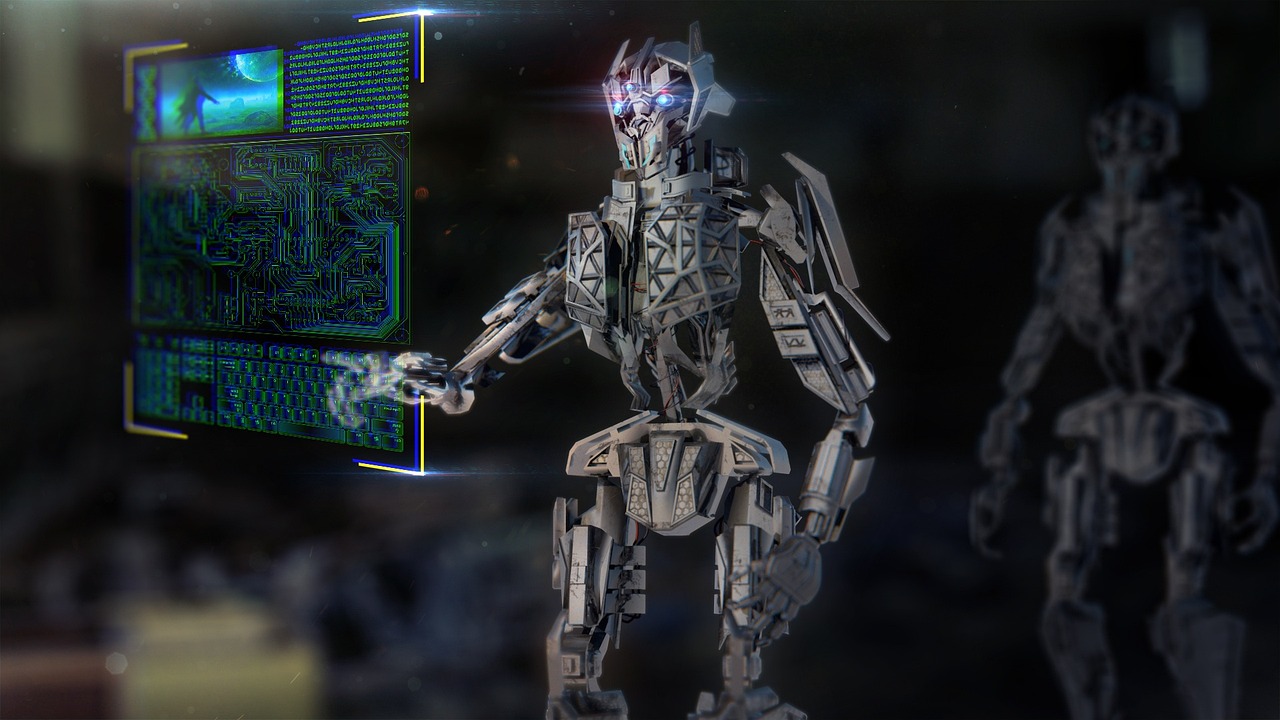
What is Artificial Intelligence (AI)?
Artificial Intelligence refers to the ability of machines or computer programs to perform tasks that typically require human intelligence. These tasks include understanding natural language, recognizing patterns, solving complex problems, and making decisions. AI systems learn from experience and improve their performance over time.
What is Machine Learning (ML)?
Machine Learning is a subset of AI that focuses on enabling computers to learn from data without being explicitly programmed. Instead of relying on explicit instructions, ML algorithms learn patterns from data and use these patterns to make predictions or decisions. In essence, machine learning allows computers to learn and adapt from experience.
Key Concepts in AI and ML:
- Data: Data is the foundation of AI and ML. Algorithms learn patterns from data, and the quality and quantity of the data play a crucial role in the accuracy of predictions.
- Training: In ML, algorithms are trained on a dataset to learn patterns. The training process involves adjusting internal parameters to minimize errors and improve predictions.
- Features: Features are specific attributes or characteristics of the data that algorithms use to make predictions. Selecting relevant features is essential for accurate results.
- Algorithms: Algorithms are sets of rules or instructions that models use to learn from data. Different algorithms are used for different types of tasks, such as classification, regression, clustering, etc.
- Models: ML models are representations of patterns learned from data. They’re used to make predictions on new, unseen data.
- Supervised Learning: This is a common type of ML where the algorithm learns from labeled data. It learns to map inputs to correct outputs, enabling it to make predictions on new, unlabeled data.
- Unsupervised Learning: In this type, the algorithm learns from unlabeled data, discovering hidden patterns or structures within the data.
- Reinforcement Learning: Reinforcement learning involves training a model to make a sequence of decisions in an environment to maximize a reward. It learns by receiving feedback from its actions.
- Neural Networks: These are a class of algorithms inspired by the human brain’s structure. Deep Learning, a subset of ML, uses neural networks to solve complex tasks like image and speech recognition.
AI and ML applications are widespread and growing rapidly, including:
- Image and Speech Recognition: Identifying objects in images or transcribing spoken language.
- Natural Language Processing (NLP): Enabling computers to understand, interpret, and generate human language.
- Recommendation Systems: Suggesting products, movies, or content based on user preferences.
- Autonomous Vehicles: Developing self-driving cars that can perceive their environment and make decisions.
- Healthcare Diagnostics: Assisting doctors in diagnosing diseases from medical images and data.
- Financial Analysis: Predicting stock prices, detecting fraud, and optimizing investments.
Why AI and ML Matter:
- Automation: AI and ML enable automation of repetitive tasks, freeing humans to focus on more creative and strategic work.
- Personalization: Recommendation systems, like those on streaming platforms, use AI to personalize user experiences based on preferences.
- Healthcare: AI helps in diagnosing diseases from medical images and predicting patient outcomes.
- Finance: ML algorithms analyse financial data to detect fraud and predict market trends.
- Autonomous Vehicles: AI is a critical component in self-driving cars, enabling them to perceive and navigate their surroundings.
AI: Crafting Intelligence, Embracing Possibility
AI is the culmination of human ingenuity and technological prowess, seeking to breathe life into machines. It’s like teaching a computer to think, learn, and adapt like a human – a digital prodigy born from our desire to create the ultimate thinking machine. From voice assistants like Siri and Alexa that chat with you to recommendation systems that predict what you’ll love next, AI is the magic woven into our everyday lives.
ML: Where Data Sparks Miracles
Enter the realm of ML, a captivating branch of AI that bestows machines with the power to evolve. Imagine showing a computer thousands of pictures of cats and dogs, letting it figure out the difference without explicitly telling it. That’s the magic of ML – instead of hardcoding rules, we feed it data to learn, adapt, and make its own predictions. It’s like raising a digital pet that grows smarter with every piece of information it gobbles up.
A Symphony of Data and Algorithms
Here’s where the excitement amplifies. We collect oceans of data from our digital footprints – every click, like, and search contributes to this treasure trove. Then, we introduce algorithms – sets of instructions that let machines process data and spot patterns. The machine, like an apprentice musician, practices and fine-tunes these patterns until it can play beautiful melodies – in this case, make accurate predictions.
From Self-Driving Dreams to Virtual Realities
AI and ML are transforming industries faster than we can imagine. Self-driving cars? They rely on AI to perceive their surroundings and make split-second decisions. Virtual assistants? They blend AI’s language prowess with ML’s prediction abilities to talk and understand like a friend. Healthcare? AI analyzes medical data to diagnose diseases earlier than ever. The possibilities are as boundless as human creativity.
[…] Learning more ML stands for the core of Alexa’s intelligence, which learns every time you interact with […]