

Hey there, tech enthusiasts! You’ve spent countless hours coding, debugging, and dreaming about the day you’ll land that dream job in tech. But how do you make that dream a reality? One word: Internships. Yep, those short-term gigs often come with coffee runs and endless learning opportunities. In this blog, we’ll dive into why internships are the secret sauce to jumpstarting your coding, development, and software engineering career, how they can benefit you, and tips on making the most out of them. Ready? Let’s get started!
The Role of Internships in Coding, Development, and Software Engineering Careers
1. Real-World Experience
- Bridging the Gap: Internships act as a bridge between classroom learning and real-world application. Remember all those coding assignments? Now, you get to apply them to actual projects.
- Hands-On Learning: Get your hands dirty with real code. Fix bugs, write new features, and see your work in action.
2. Skill Development
- Technical Skills: You’ll learn new languages, frameworks, and tools that are industry standards. Think of it as a crash course in what’s hot in tech right now.
- Soft Skills: Communication, teamwork, and problem-solving skills are honed when you work in a professional environment.
3. Networking Opportunities
- Meet the Pros: Internships place you in the same room as seasoned professionals. These are the people who can offer advice, mentorship, and maybe even a job.
- Build Connections: Networking isn’t just about finding a job. It’s about building relationships that can support you throughout your career.
4. Resume Enhancement
- Stand Out: A resume with real-world experience stands out. It shows employers that you’re not just book-smart but have practical experience too.
- Demonstrate Commitment: It proves you’re serious about your career and willing to put in the effort to succeed.

How Internships Benefit Your Coding Career
1. Understanding Workplace Dynamics
- Team Collaboration: Learn how to work within a team, use project management tools, and understand team dynamics.
- Time Management: Juggling multiple tasks and meeting deadlines is a skill you’ll master during your internship.
2. Exposure to Latest Technologies
- Stay Current: Companies often use cutting-edge technologies. Internships expose you to these, keeping your skills up-to-date.
- Practical Knowledge: You’ll understand how these technologies are used in real-world scenarios.
3. Building Confidence
- Real Achievements: Successfully completing tasks and projects boosts your confidence.
- Problem-Solving: Facing and overcoming challenges during your internship makes you a more confident coder.
4. Potential Job Offers
- Prove Your Worth: Impress your employers during your internship, and they might offer you a job.
- Get Hired: Many companies prefer hiring interns as full-time employees because they’ve already seen their work ethic and skills.

Benefits of Internships in Development and Software Engineering
1. Learning Best Practices
- Code Quality: Understand the importance of writing clean, maintainable code.
- Version Control: Gain proficiency in version control systems like Git, essential for collaborative development.
2. Exposure to Agile Methodologies
- Scrum and Kanban: Learn how Agile methodologies are implemented in real-world projects.
- Project Management Tools: Get hands-on experience with tools like Jira, Trello, and Asana.
3. Working with Legacy Code
- Real-World Challenges: Learn how to work with existing codebases, refactor old code, and integrate new features.
- Technical Debt: Understand the concept of technical debt and how to manage it effectively.
4. System Design and Architecture
- Design Patterns: Gain knowledge of common design patterns used in software development.
- Scalability: Learn about designing scalable systems that can handle growth and increased load.

Making the Most of Your Internship
1. Be Proactive
- Take Initiative: Don’t wait for tasks to be assigned. Look for ways to contribute and improve processes.
- Show Enthusiasm: Be eager to learn and take on new challenges.
2. Seek Feedback
- Ask Regularly: Regularly ask for feedback on your work to understand where you can improve.
- Be Open: Accept constructive criticism and use it to grow.
3. Network Actively
- Engage with Colleagues: Build relationships with your colleagues. Attend company events and socialize.
- Connect on LinkedIn: Use LinkedIn to connect with professionals you meet during your internship.
4. Reflect and Learn
- Self-Assessment: Reflect on your experiences. Identify what you’ve learned and areas for improvement.
- Set Goals: Use your reflections to set goals for your future career.
Real-Life Success Stories
Jane’s Journey from Intern to Full-Time Developer
Jane was a computer science student who landed an internship at a startup. She took initiative, learned new technologies, and even led a small project. Her hard work paid off when the company offered her a full-time position after her internship ended. Jane’s story is a testament to how internships can open doors to new opportunities.
Mark’s Experience with Mentorship
Mark interned at a large tech company where he was paired with a mentor. His mentor guided him through complex projects and provided valuable career advice. Mark not only gained technical skills but also built a lasting professional relationship that continues to support his career growth.
Lisa’s Leap into AI
Lisa was fascinated by artificial intelligence but had no real-world experience. She landed an internship at an AI-focused company, where she worked on machine learning projects. By the end of her internship, Lisa had a portfolio of AI projects and was offered a position as a junior data scientist.

Common Mistakes to Avoid During Internships
1. Not Asking Questions
- Fear of Looking Incompetent: Many interns hesitate to ask questions for fear of appearing incompetent. However, asking questions is a crucial part of the learning process.
- Missing Out on Learning Opportunities: By not asking questions, you miss out on valuable learning opportunities that can enhance your skills and understanding.
2. Being Passive
- Waiting for Instructions: Don’t just sit around waiting for instructions. Be proactive and look for ways to contribute.
- Missed Opportunities: Being passive can lead to missed opportunities to showcase your skills and initiative.
3. Ignoring Feedback
- Taking Feedback Personally: Don’t take feedback personally. It’s meant to help you grow.
- Not Implementing Changes: Ignoring feedback means you’re not improving. Use feedback as a tool for growth.
4. Overcommitting
- Burnout Risk: Taking on too much can lead to burnout. Learn to balance your workload.
- Quality Over Quantity: Focus on delivering quality work rather than taking on more than you can handle.
How to Find the Right Internship
1. Leverage Your Network
- Ask for Referrals: Reach out to your network for internship opportunities. A referral can go a long way.
- Connect on LinkedIn: Use LinkedIn to connect with industry professionals and explore internship postings.
2. Utilize Online Platforms
- Job Portals: Websites like Indeed, Glassdoor, and LinkedIn have dedicated sections for internships.
- Company Websites: Check the career sections of company websites for internship postings.
3. Attend Career Fairs
- Meet Employers: Career fairs are a great place to meet potential employers and learn about internship opportunities.
- Hand Out Resumes: Bring copies of your resume to distribute to recruiters.
4. University Resources
- Career Services: Many universities have career services that can help you find internships.
- Alumni Network: Tap into your school’s alumni network for potential opportunities and advice.
The Importance of a Strong Online Presence
1. Build a Professional LinkedIn Profile
- Showcase Your Skills: Highlight your skills, experiences, and accomplishments on LinkedIn.
- Connect with Professionals: Build a network of industry professionals who can support your career growth.
2. Create a Portfolio
- Display Your Work: A portfolio website can showcase your projects and coding skills.
- Stand Out: A well-designed portfolio can set you apart from other candidates.
3. Engage in Online Communities
- Join Forums: Participate in coding forums and online communities like Stack Overflow and GitHub.
- Contribute to Open Source: Contributing to open-source projects can demonstrate your skills and commitment to the tech community.
Leveraging Remote Internships
1. Flexibility and Accessibility
- Work from Anywhere: Remote internships allow you to work from the comfort of your home or any location with internet access.
- Global Opportunities: You can apply for internships from companies worldwide, broadening your options and exposure.
2. Building Virtual Communication Skills
- Mastering Digital Tools: You’ll become proficient in using digital communication tools like Zoom, Slack, and Microsoft Teams.
- Effective Remote Collaboration: Learn to collaborate effectively with team members in different time zones.
3. Maintaining Work-Life Balance
- Setting Boundaries: Remote internships teach you to manage your time effectively and maintain a healthy work-life balance.
- Self-Motivation: You’ll develop the discipline to stay productive without the structure of a traditional office environment.
Industry-Specific Internship Tips
1. Software Development
- Focus on Coding Skills: Ensure you are proficient in key programming languages and frameworks used in the industry. For example, knowing languages like JavaScript, Python, or Java, and frameworks such as React, Angular, or Django can give you a significant edge.
- Project Management: Familiarize yourself with Agile and Scrum methodologies. Understanding these project management approaches will help you work more effectively in a team and adapt to changes in project requirements.
- Code Reviews: Participate actively in code reviews. They are a great way to learn best practices and improve your coding skills by getting feedback from experienced developers.
- Debugging and Testing: Gain experience in debugging and testing. Learn how to use tools like JUnit, Selenium, or Jest to ensure that your code is reliable and efficient.
2. Data Science
- Learn Data Tools: Get hands-on experience with tools and languages commonly used in data science, such as Python, R, and SQL. Proficiency in these tools will be crucial for analyzing and interpreting data effectively.
- Understand Algorithms: Study machine learning algorithms and how to apply them to real-world problems. Knowledge of algorithms like linear regression, decision trees, and neural networks will help you build predictive models and derive insights from data.
- Data Visualization: Learn how to use data visualization tools like Tableau, Power BI, or Matplotlib to present data findings clearly and effectively. Good visualization skills can help you communicate complex data insights to non-technical stakeholders.
- Statistical Analysis: Develop your statistical analysis skills. Understanding concepts such as hypothesis testing, confidence intervals, and distributions is important for making data-driven decisions.
3. Cybersecurity
- Know the Basics: Understand the fundamentals of network security, encryption, and ethical hacking. Knowledge of common threats and vulnerabilities, such as SQL injection, cross-site scripting (XSS), and malware, is essential for protecting systems and data.
- Certifications: Consider obtaining certifications like CompTIA Security+, Certified Ethical Hacker (CEH), or CISSP (Certified Information Systems Security Professional) to enhance your credentials and demonstrate your commitment to the field.
- Incident Response: Learn about incident response and how to handle security breaches. Being prepared to respond effectively to security incidents is crucial for minimizing damage and protecting sensitive information.
- Penetration Testing: Gain experience in penetration testing. Tools like Metasploit, Burp Suite, and Nmap are commonly used to identify and exploit vulnerabilities in systems.
4. UX/UI Design
- Design Principles: Master the principles of design and user experience. Understanding concepts such as usability, accessibility, and visual hierarchy will help you create designs that are both functional and aesthetically pleasing.
- Tools and Software: Get comfortable with design tools like Adobe XD, Figma, and Sketch. Proficiency in these tools will allow you to create high-fidelity mockups, prototypes, and user interfaces.
- User Research: Conduct user research to understand the needs and preferences of your target audience. Techniques like surveys, interviews, and usability testing can provide valuable insights for designing effective user experiences.
- Iterative Design: Embrace an iterative design process. Create prototypes, test them with users, and refine your designs based on feedback. This approach helps ensure that your designs meet user needs and address potential issues early on.
The Long-Term Impact of Internships
1. Career Advancement
- Skill Growth: Internships provide an opportunity to develop and refine your skills, which can lead to career advancement. The experience you gain can help you progress from entry-level positions to more senior roles.
- Job Readiness: Internships prepare you for the workforce by exposing you to industry practices and expectations. This readiness can make you a more attractive candidate for future job opportunities.
2. Building a Professional Reputation
- Industry Recognition: Performing well during your internship can help you build a positive reputation in the industry. Your work ethic and achievements can lead to recommendations and referrals from industry professionals.
- Portfolio Development: The projects and tasks you work on during your internship can be showcased in your portfolio. A strong portfolio can demonstrate your capabilities to potential employers.
3. Personal Growth
- Confidence Building: Successfully completing an internship can boost your confidence and self-efficacy. You’ll gain a sense of accomplishment and belief in your abilities.
- Adaptability: Internships teach you how to adapt to different work environments, cultures, and challenges. This adaptability is valuable in a rapidly changing industry.
Conclusion
Internships are a game-changer for anyone looking to kickstart their coding, development, or software engineering career. They offer real-world experience, skill development, networking opportunities, and a chance to boost your resume. By being proactive, seeking feedback, networking, and reflecting on your experiences, you can make the most of your internship and set yourself up for a successful career in tech.
So, embrace these opportunities and get ready to take your coding career to the next level! Whether you’re diving into software development, exploring data science, defending against cybersecurity threats, or designing user-friendly interfaces, internships are your gateway to growth and success.
Call to Action
Start Your Internship Search Today
- Don’t Wait: Start looking for internships now. The earlier you start, the better your chances of finding a great opportunity.
- Use the Tips: Leverage the strategies mentioned to find the perfect internship that aligns with your career goals.
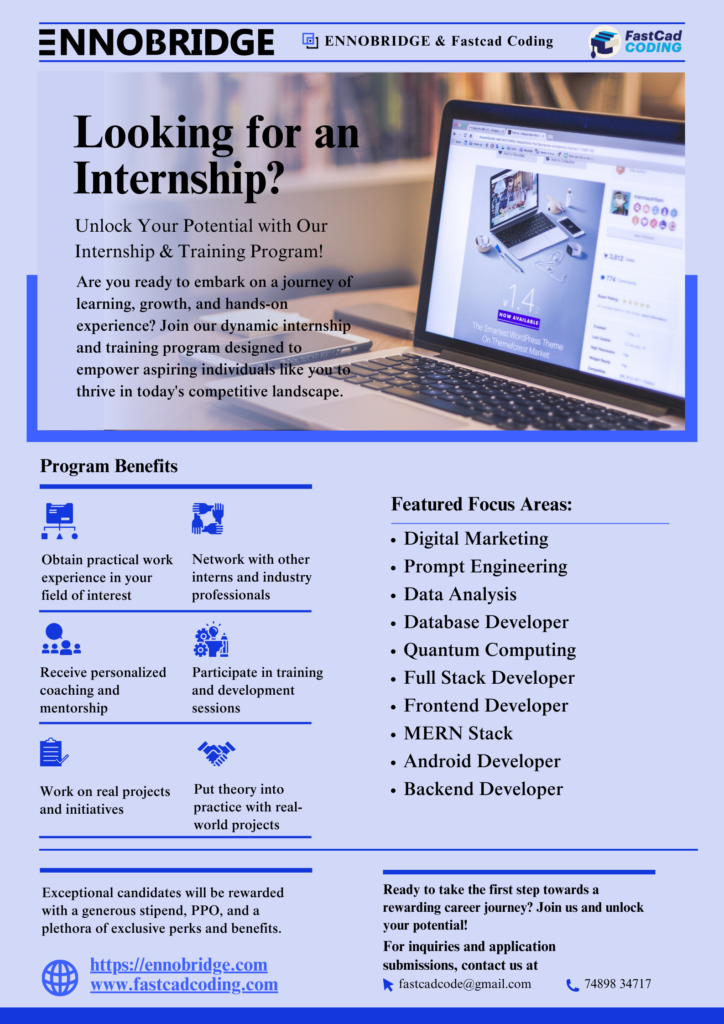
- Internship at Fastcad
Share Your Experience
- Comment Below: Share your own internship experiences and tips in the comments section. Let’s learn from each other’s journeys!
- Subscribe for More: Follow our blog regularly on our website fastcad coding for more career advice, coding tips, and tech insights. Stay tuned for future posts that will help you navigate your tech career!
Connect with Us
- Follow Us on Social Media: Connect with us on Instagram, LinkedIn, and Facebook for the latest updates and tech news.
- Linkedin Page
- Instagram Page
Leave a Reply