
Overview: We are living in the future! Greetings from the FastCAD Coding.
For instance, Whirlpool recently provided an overview of three distinct pilot studies, stating that “building a (smarter) mouse—one ancillary benefit possibility is, probably, an intergalactic starship.” Imagine it.Suddenly, instead of just staring at the ceiling or watching friends’ reruns, you’re splayed out on your sofa. Re-runs for the millionth time???? P(Any_good_idea obviously divorces reality as quickly.; maybe creating something over years operating in concert with humans) Ok, so now you’re dreaming up and designing temporary apartments without moving muscle, or navigating through galaxies during crazy distant planets. In the realm of augmented reality (AR) and virtual reality (VR), it is difficult to draw a clear distinction between reality and fantasy.
What is AR and VR? The Basics Explained
Fine, moving forward with the basics. Think you’re describing AR and VR to your grandma. You could say:
Pure AR — Augmented Reality (AR)
We begin with AR — Augmented Reality You could even consider AR the digital cool whip for your real-world sundae. Augmented Reality is where digital content (images, sounds or text) are placed over your physical real-life environment Chances are you have even witnessed AR and did not realise it. Remember Pokémon Go? This is AR in the wild: adorable little monsters on your corner, just waiting to be caught Be a Pokemon Master anywhere you go. AR takes the place of real-world (sometimes) to make your everyday spaces better [for gaming])
What is Virtual Reality (VR)?
Now, with VR —Virtual Reality—pushing the envelope even more. VR, on the other hand, throws you into a fully virtual world rather than projecting digital content over our own. Picture putting on a headset and next thing, you’re right in the middle of a battle from medieval times, or strolling around Mars. VR removes you from the real world and places you into a different one entirely. Walking straight into the video game as its only protagonist. They are both computer generated, of course, but is feels real.
AR vs. VR; what are the differences?
So, what really divides AR and VR Four Wall Studios? Even though they both offer an immersive experience, their approach is very different:
AR — Integrates digital visualizations into the real world. You are still in your living room, now there is a virtual cat on coffee table.
VR: It slides your real-world environment away… creates their own new world. Serve you a piña colada in VR on that beach and everything becomes real.
In other words, AR enriches your reality where VR creates a new one.
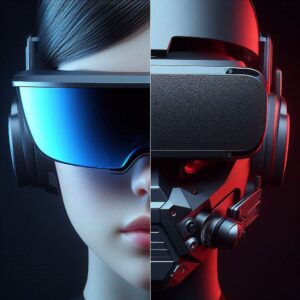
How AR and VR Work
1. Hardware:
AR and VR are heavily dependent on specialized hardware to deliver an immersive experience. What makes it tick
AR Hardware:
Cameras and Sensors — AR devices used cameras to capture the real world and sensors was used for positioning objects/ user movements Hinweise Most of us first experience AR through the screens in our hand — smartphones and tablets are common platforms for augmented reality applications due to their gyroscopes, accelerometers, GPS sensors (for spatial awareness) etc…
Smart Glasses: Microsoft HoloLens and Google Glass are AR wearables providing a step in the right direction of hands-free augmented reality. By using cameras and projectors, as well as sensors implemented into the environment to overlay digital data onto real surfaces.
VR Hardware:
Head-Mounted Displays (HMDs): The essence of VR, HMDs like the Oculus Rift, HTC Vive and PlayStation VR deliver users a stereoscopic 3D view along with an expansive field of vision that provides depth perception as well as immersion effect.
Motion Controllers- tracked hand controllers ( Think Oculus Touch, Vive wands) used to interact in the virtual world. Advanced VR systems also include full-body tracking suits and gloves.
Room-scale Tracking: The ability to track the VR system sensors tracking the position of a person in real-world space, and to allow that user movement around their virtual world.
2. Software and Algorithms:
AR and VR may be exciting to think about, but the real magic is happening in software that powers these experiences. Here’s a breakdown:
AR Software:
Computer Vision: AR based on computer vision can understand and interpret the real world. This spans object recognition, scene understanding and depth sensing. For example, ARKit (Apple) and ARCore (Google) place digital objects in the human environment using SLAM technology to “remember” the space.
Rendering Engines: While AR applications are used to render digital objects in real life. Popular engines are Unity and Unreal Engine, they allow you to create a 3D object or environment in which will interact very well with the real world.
VR Software:
3D Modelling & Animation: VR environments are constructed using 3D modelling tools such as Blender, Maya (Autodesk) or even 3ds Max Developers can use the tools to develop realistic characters and environments.
Physics Engines: Your VR app is going to do a lot of things like falling and colliding. It will feel far more realistic if you simulate gravity, collisions etc in your physics engines. Mostly you will find Havok and NVIDIA PhysX there.
Unity, Unreal Engine: Given VR is highly interactive and immersive, game engines such as Unity and Unreal Engine form the basic structure for creating experiences that usually have real-time interaction. These engines take care of everything from graphics rendering to the user input and physics simulation.
3. Cloud Computing:Networking and Cloud computing;
AR and VR are frequently networked and heavily require real-time data processing, cloud computing for multiplayer etc.
Low-latency networks are crucial to getting a solid multiplayer experience on VR, as well as many of the best social virtual reality networking platforms. These technologies, from 5G to fiber-armored internet connections are crucial for the realization of these applications.
Cloud Computing: AR and VR applications are significantly dependent on the cloud as a source of processing power, storage capacity for large amounts of data streamed in real time. Among these are Google Cloud and Amazon Web Services (AWS), which both provide powerful platforms to manage the high computations required in AR/VR experiences.
OK, so how does all this digital trickery actually work? In this blog post, we want to provide some foretaste of the mechanics that power AR and VR.
1. That is, Augmented Reality (AR) — A new Way of Enhancing Your World
Sensors and Cameras: AR depends on being able to understand what is happening in the physical environment, so sensors and cameras are incredibly important. They track things like the depth of your environment, lighting in a room and where objects are located.
Projection: Like vivo, when the device knows how your environment looks it then projects digital elements over. For example, in an AR game it may place a digital character on your real-world living room floor. This projection blends very well with your view of the world, making it look real.
AR Processing Power AR is computationally intensive. Your device collects the data from sensors and use it to real-time organicy place digital elements related what you do. Thus, AR apps work better with a smartphone that has high-end hardware or special AR devices.
Instead, AR also has an interaction. Take AR shopping apps in which you can try on clothes and move the items to see how furniture will fit into your home. This device will let you interact with digital objects — fingers and gestures only, no need for a stylus.
2. Virtual Reality(VR) : World of New journey
HMD (Head-Mounted Display): If VR was a movie, then the HMD or Head-mounted display would be it star. It’s as if you were strapping a tiny, portable high-definition television set to your face. The HMD removes the outside world and brings you into a virtual environment with stereoscopic 3D images that change in response to movements of your head.
Motion Tracking — VR works through the continuous motion tracking, which gives them a sense of realism. The movements you make wearing the headset, and possibly hand controllers or motion cameras worn in your environment are then translated into gestures/actions performed within whatever virtual world that sits inside of it. Look left, and the virtual world follows. Stretch your hand out, and in VR you can pick up a virtual object.
Audio — we found that good positional audio is crucial for VR. Most VR headsets have 3D audio integrated into the headphones. To the user, this makes sounds emanate from where they should in a virtual space which is even more immersive.
Vibration Feedback: I know this as haptics, or sensations in your hands that are meant to represent things you “feel” while playing in VR. Your controllers might vibrate when you pick up a thing, or get tossed back by the blast wave at gigantalistic explosion in other VR venture.
Programming Languages, Frameworks & Platforms
Any Unreal developers in the house who are interested in making AR and/or VR apps? These are the languages, frameworks and platforms you’ll be working with:
1. Programming Languages
Unity (Game Engine): Most of the developers who love to develop AR and VR based games use Unity, with C# being their programming language. It is a pretty simple language to pick up, and it gives you massive punch for creating interactive interfaces.
C++ – Most commonly found in Unreal Engine which is another big boy among AR/VR vendors. C++ is a highly performant language — it contributes to top-tier VR.
JavaScript: If you are experimenting with WebAR or WebVR (the AR / VR experience that runs in the web browser), then JavaScript is your friend. With libraries like Three. Using js and A-Frame, there was no need to bundle into a standalone app for creating immersive experiences.
Python (A little less direct for AR/VR development but commonly used in AI and machine learning with possibility to integrate into your AR/VR apps)
2. Frameworks and SDKs
Unity: Unity is among the widely used game engine which promotes versatile capability in deploying AR and VR. Its user-friendly and has all the community + workaround docs.
For truly immersive and beautifully rendered VR experiences, use Unreal Engine. It is very powerful, but a little bit complex than Unity.
ARKit and ARCore: The augmented reality framework built by Apple and the other Build By Google. This means that ARKit is for iOS and ARCore is to Android. If you want to make AR apps for a smartphone, then both are critical.
Corydon: Large AR platform, popular for industrial use-cases. It works across a large number of devices, and supports powerful image/object recognition.
Situated away: Forest VR experience innovation web frameworks It’s based on HTML so if you are familiar with web development, A-Frame will be a good way for you to get into VR content creation.
3. Platforms
Oculus: A vanguard VR platform by Facebook. Oculus Rift and Quest are also major headsets among developers as well, with gamers.
SteamVR — This is somewhat like a VR Netflix where all of the headsets (except for PS4) can contribute. For VR game developers, the same is a must-know.
HoloLens: the AR platform from Microsoft, popular in enterprise applications. Augmented Reality Experiences For Industrial And Educational Settings (HoloLens Headset)
Magic Leap — Another platform made by a MR company mostly known for their light weight body-wearable headset. Magic Leap specializes in spatial computing or a blend of digital content with the physical world.
AR and VR Use Cases- Other Than Games
Now that you know the tech and tools, oh what can AR & VR actually let me do? Warning: WAY more than gaming
1. Healthcare
Surgical Training: Picture the ability of a surgeon to perform nearly as delicate and complex procedures on “practice” patients before navigating through them in real people. Surgical Simulations in VR Immersive: Surgeons can experience real-life simulation practice beforehand in a simulated and controlled environment.
Virtual Reality in Mental Health Treatment For example, exposure therapy was used as to conduct treatments where people could be gradually guided into a virtual marriage,social and family environment.
Augmented Reality in the Operating Room That even includes real-time data for surgeons who, during a procedure, are able to overlay digital images onto the body of their patient. You never know with the internal staff, but you see right through THAT PITCH.
2. Education and Training
Experiential Reading: Say Goodbye To A Boring Ancient Rome Text Book And Hello The Actual Streets Of Rome VR has reshaped education, enabling students to visit historical places around the world or even other planets thanks to virtual tours and science experiments.
SkillsTraining — From car mechanics to astronauts, VR is employed for skill training. It is especially effective when used in areas where errors can have serious negative consequences, such as fields which threaten human lives or property (e.g., aviation and emergency response).
3. Retail and E-commerce
Virtual Try-On App: Have you ever desired to try a new dress or shoes without going out, especially on weekends when all stores are jam-packed? Well, AR lets you do just that. This way the clients know how that piece of clothing, accessories or even makeup will look on them from their homes.
VR Stores: Think of being able to explore through a shopping center, looking at items that are almost real. With VR, however, you can get an immersive shopping experience — even being able to touch and feel the products through your virtual hands or interact with a sales assistant nearly.
4. Real Estate and Architecture
Virtual Tours: VR and how were changing the way you buy a home. These can be used by potential buyers to view property virtually and walk through rooms as if they were really there.
AR in DesignArchitects and designers are using AR to see right into the finishing of an empty space. As a result, they can finally see buildings in 3D and sometimes even walk through them before the construction process commences.
5. Entertainment and Media
HoloCinema: The Future of Film is Interactive 360-degree films, where viewers can look around and explore the world with their eyes are an example of VR experience.
LIVE EVENTS: Can’t get to the show? No problem! That seems to be the promise of live VR events — sit back and pretend you’re there, right in your own living room.

Step-By-STEP: Beginner Guide for How to Start Develop
Go on and start your AR or VR project today! To get you going, here is a guide on the things I did:
1. Learn the Basics
Programming: Let’s start with square one. Use a programming language that is popular for AR/VR development, always C# for Unity or C++ in Unreal Engine. JavaScript for Web (If you are in to web-based AR/VR)
3D Modeling — Understanding how to build 3d models is essential for VR development. This article on open-source 3D software includes Blender (IMO the one of best and primarily for free) as a tool to get your hands dirty in generating beautiful visuals that you can later use in projects.
2. Choose Your Tools
Pick a Game Engine: Unity and Unreal Engine stand out in the competition. Select one of them according to your requirements and start getting used to using its interface & features.
Investigate SDKs: Determine which layer of an operating system that you want to develop for (mobile, desktop or web) and get the appropriate set of software development tools. ARKit and ARCore (mobile AR) A-Frame( web-based VR )
3. Build Your First Project
Baby Steps: You are not going to create the next big VR game from day 1. If you are new, instead of jumping into a whole game or complicated project, start with small projects like an AR app that places a 3D object in the real world somewhere close to us OR create some simple VR environment where we can take few steps.
That way then with a basic project you can add more features. Play around with interactivity, physics and more advanced animations.
4. Join the Community
Forums & Groups : The AR and VR developer communities are super active. Discuss your work and get feedback from other developers by joining forums, groups in social media or virtual meetups.
Online Courses: Coursera, Udemy and edX provide specialized courses on AR/VR development Those are a great opportunity to further your understanding and learn by the best.
5. Keep Experimenting
Get In-The-Know: AR and VR are fast-moving fields. Stay current on trends, tools and technologies — read up about it in blogs, attend conferences & know what’s been the latest thereby staying relevant.
Don’t be afraid to experiment This is an area where AR and VR are brand new, so there certainly will be a lot of innovation. Developers Should Be Playing With ARKit 2 and USDZ Apple has just released a new version of its tools so be sure to the beginning or end of your week creating something whether this is how you interact with virtual objects on screen.
Examples and Case Studies from the Real World
Here are some examples to get you better inspired along the way…
1. IKEA Place
What It Is: IKEA’s AR app, Titled “IKEA Place,” lets you see what it’s furniture will look like in your home before you commit to buying it. Which virtual space allows you to place imaginary sofas, tables etc in your living room according to the surrounding?
This Is Cool: No longer do you have to guesstimate or whip out the tape measure. IKEA Place simply is an AR app which makes shopping for furniture both easier and more intuitive. This is a fine example of AR solving the real-world, everyday issues.
2. Beat Saber
What It Is: Beat Saber is one of the most popular games in VR. By day, it’s a rhythm game played with virtual lightsabers in time to music. Related: This video game is great exercise
Why It Rocks: Beat Saber demonstrates what VR can do to invent completely new ways of playing games. Not just because of how immersive it is or how physically you have to play the game, but as a demonstration for what can be and has been achieved within virtual reality.
3. HoloLens in Surgery
What It Is: Microsoft HoloLens has been used in the operating room to help surgeons. Using the AR headset, visible digital imaging of a patient’s body is overlaid with computer-generated images showing internal organs and structures that surgeons then use to guide their surgery.
Why We Like It: This is a strong example of how AR can have life-saving applications. With the ability to deliver even more data on-the-fly, surgery in AR might also lead us towards better outcomes and safer surgeries for some of these hard-to-reach operations.
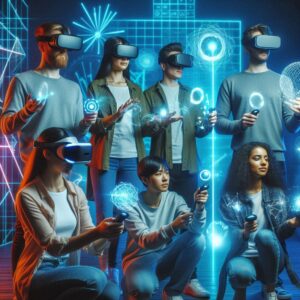
The future of AR and VR: 5 key trends — from extended realities to sensor fusion
Well, what about the future of AR & VR? The bottom line is this: Trends to Look Out For
1. Shift Across Global Industries
Apart From Gaming: Although gaming will continue to greatly influence the adoption rate of AR and VR, we are also observing these technologies being adopted by different sectors such as healthcare, education or retail. AR and VR are being used in more ways than ever, many of which you would likely not have thought of.
2. Improved Hardware
More Manageable Devices: Weight and bulk have also held back VR — the whole limitation of this tech is on a tether, after all. However, as technology improved we have seen the development of headsets that are smaller and lighter and more comfortable. This is going to make VR more viable for the average consumer.
3. 5G and Cloud Computing
Low Latency, High-Speed Connections: 5G networks will be faster, and far more reliable than available in day-to-day life — the kind of connection required for non-noticeable AR/VR experiences. That, paired with cloud processing and you might be able to stream high-fidelity VR environments directly to your headset without the need of a PC.
4. AI and Machine Learning
Intelligent Experiences: Artificial intelligence and machine learning are next on the horizon of AR and VR. Picture AI-born virtual beings that detect and react to emotions, or Augmented Reality apps personalized by your trends.
5. WebAR and WebVR
In Browser Immersion — WebAR and WebVR = No App Necessary That is likely to bring these technologies reach the masses, thus lowering barrier to entry.
Closing Thoughts: The Future of AR and VR
Augmented and Virtual Reality have gone beyond buzzwords to change the way we interact with our environment. This is a great opportunity for Developers to craft more challenging and interesting experiences. Whether you want to change healthcare, develop the top game, or just play around a bit in AR and VR — there is nowhere lack of opportunity.
To really do well in this space, it takes a great deal of curiosity and learning — never stop experimenting. Augmented and virtual reality are here to stay, so people who innovate today will take part in creating the digital experiences of tomorrow.
So, what are you waiting for? Pick up a headset and get dirty in the world of AR, VR development; start building it how you want to envision. Dive into Augmented Reality (AR), Virtual Reality(VR) Development Build Your Future yourself.