
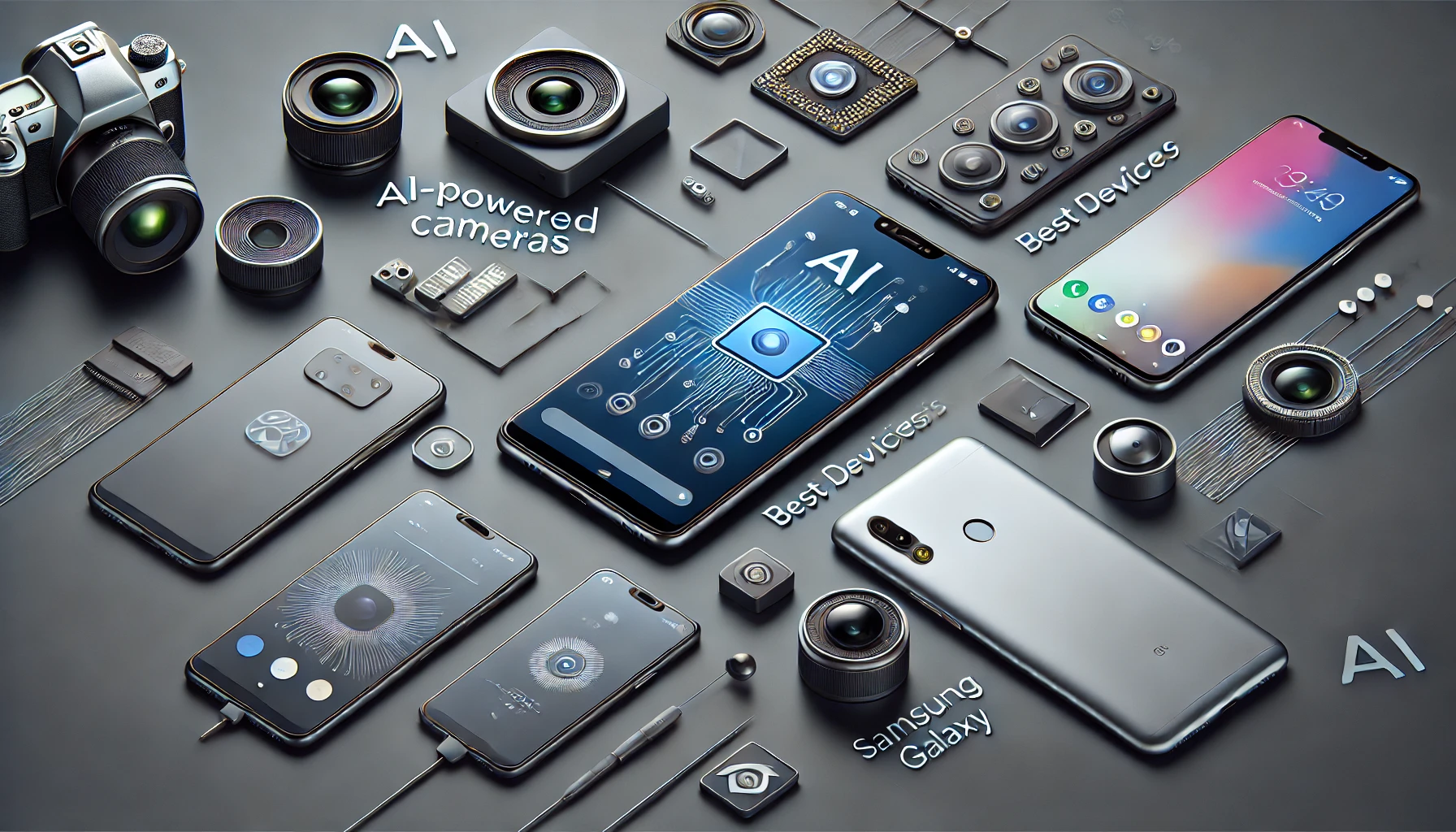
The Role of AI in Photography
Smartphone cameras have experienced immense transformations over the last decade, and artificial intelligence (AI) has played a pivotal role in this revolution. Gone are the days when mobile phones were only capable of producing grainy, low-quality images. Today’s smartphones are packed with powerful AI-powered cameras that rival professional cameras in terms of clarity, depth, and color accuracy. AI allows even novice users to capture stunning photos, thanks to intelligent systems that can adjust lighting, focus, and color balance in real-time.
How AI Works in Smartphone Cameras: A Deep Dive into the Technology
AI in smartphone cameras works by analyzing large amounts of data in real time. When you take a photo with your smartphone, you might think it’s just a simple click of a button. However, behind the scenes, an incredibly complex process is at play. Your phone’s AI system analyzes the scene you’re photographing—lighting conditions, subject, background—and optimizes the settings without you having to do anything manually.
- Image Recognition and Scene Detection: The first and most important thing AI would do in the smartphone camera is detect what is in front of the lens. Be it the shot of your pet, a cityscape captured at night, or a close-up portrait. That is what the AI system detects in the frame and adjusts camera settings like exposure, white balance, ISO (sensitivity to light) and focus.For example, if the AI feels that you are taking a landscape photograph during daylight, it would regulate the exposure in order not to overexpose the sky with the shadows retained. When it captures a human face in portrait mode, it will blur the background and focus on the details of the face.
- Computational Photography: AI has brought the innovation of the term computational photography, which combines the usage of software and hardware for creating clearer, sharper, and more precise pictures than ever before. Computational photography is taking a series of multiple photos and then merging them into a single perfect shot with the aid of algorithms. It is often used in HDR (High Dynamic Range) and in Night Mode where multiple exposures merge into a single photo and highlight important details that would otherwise be lost.
- Real-time Photo Enhancement: Modern smartphones are now capable of performing real-time image enhancements. AI makes it possible to adjust focus, lighting, contrast, and even remove unwanted objects from the frame instantaneously. For example, Google Pixel’s AI-powered Night Sight feature allows users to take stunning photos even in near-total darkness. It accomplishes this by stacking multiple frames together and using AI to determine which parts of the image need the most light or sharpness.
- Face and Object Recognition: Another feature that AI can be afforded on a smartphone camera is face and object recognition. It can detect faces and objects in real-time, which is very important in video mode since AI keeps up with the movement and keeps them in focus. Face feature of many phones allows AI to enhance facial features by smoothing the skin, brightening the eyes, or even adjusting the skin tone based on the lighting.
- AI in Post-Processing: Now again, here, the AI isn’t done with just taking the picture; rather it’s pretty much involved in the post-processing step. It could be something like denoising of poorly lit scenes, sharpening of details, or even more inferentially applying some filters without much human intuition. For example, the A-series chips by Apple and their iPhones use them to sort of analyze every taken picture, bettering color, sharpness, and contrast without asking a single finger from the user.
Evolution of AI in Mobile Photography: How It’s Developed Over Time
AI in mobile photography didn’t develop overnight—it’s the result of years of technological advancements in both hardware and software. In the early days, smartphone cameras lacked the computing power to process complex algorithms, so AI-enhanced features were extremely basic, such as scene detection and basic face recognition.
The evolution of AI in smartphone cameras can be broken down into several stages:
- Initial Steps – Scene Recognition: The first use of AI in smartphones involved basic scene detection. Devices could recognize broad categories like “portrait” or “night” mode, and automatically adjust settings like aperture, shutter speed, and white balance. However, these early versions often struggled with more complex lighting scenarios, leading to inconsistent results.
- Machine Learning and Neural Networks: As AI evolved, so did the sophistication of camera systems. Machine learning, particularly deep learning models using neural networks, became the cornerstone of modern AI. These networks are trained on millions of images, learning to recognize patterns such as how light reflects off various surfaces, how to identify faces, or how to detect specific objects like cars or buildings. This training allows the AI to “predict” the best settings for any given photo.
- The Rise of Computational Photography: One of the most significant developments in recent years has been the shift toward computational photography. This technique doesn’t just take one image; it takes multiple frames and merges them into a single photo using algorithms. Google’s Pixel line was the first to popularize this with their HDR+ feature, which merges up to 10 images to create the perfect exposure.
- Real-Time Processing with Dedicated AI Chips: Dedicated AI Chips for Real-Time Processing Modern smartphones have dedicated chips to undertake real-time AI computations. Apple’s A-series chips and Google’s Pixel Visual Core are the most famous ones in this line. Special processors design purely for doing AI computations means that they won’t degrade the performance of your smartphone. Therefore, you will enjoy such features of AI like real-time object recognition, instant focus, and even dynamic lighting adjustments.
Key AI Features in Modern Smartphone Cameras
AI-powered cameras come with a host of features that make them incredibly versatile. Below are some of the standout features that distinguish modern AI-driven camera systems from their predecessors:
- Portrait Mode and Depth Sensing: AI-driven Portrait mode will render a bokeh effect by blurring the background while keeping the subject sharp. DSLRs were able to do this before but through AI analysis of depth and now the ability to render the same digitally, it is beginning to become the norm in modern smartphones.
- Night Mode: Nights have always been a challenge during photography; but AI has made things so much easier. Google is using long exposure to capture multiple frames quickly one after the other and even stacks them together, removing noise and adding brightness without the artificial look of an image. Industry leaders are Google’s Night Sight and Apple’s Night Mode.
- Object and Scene Detection: Whether you’re shooting a landscape, a pet, or a fast-moving subject, AI can detect and adjust settings automatically for the best result. This feature is particularly useful in video recording, where AI can keep moving objects in focus while adjusting for lighting changes in real time.
- Super-Resolution Zoom: AI plays a significant role in digital zoom. By analyzing multiple frames and enhancing details, AI can simulate a higher zoom level than the hardware would typically allow. Samsung’s Space Zoom on the Galaxy S23 Ultra is an excellent example of this feature, allowing up to 100x zoom with relatively little image degradation.
- AI Beauty Modes: AI-enhanced beauty modes analyze faces in real-time and apply adjustments such as skin smoothing, eye brightening, and even makeup effects. While these features can be turned off for a natural look, they provide excellent options for social media photography.
Getting Started in AI and Mobile Photography: How to Build Skills
If you’re a student interested in learning how to develop AI-powered camera technology or simply want to improve your photography skills, there are several paths you can take. Here’s how to get started:
- Understanding AI and Machine Learning: Before you can develop or work with AI-powered cameras, it’s essential to understand the basics of AI and machine learning. There are countless resources available online, from free courses on platforms like Coursera, Udemy, and edX, to more formal computer science degrees that cover AI and deep learning.
- Photography Basics: Having a solid understanding of photography is crucial. Knowing how lighting, exposure, focus, and composition work will give you a deeper understanding of how AI enhances these elements. There are excellent photography courses available online, and many free resources can be found on YouTube.
- Hands-on Learning with Smartphone Cameras: Many modern smartphones allow users to experiment with AI features in real-time. Use your phone’s manual mode to adjust settings like ISO, aperture, and shutter speed while leveraging AI features like night mode and portrait mode to see how they affect your shots.
- Learn Python and AI Development: If you want to delve into the development side, learning programming languages like Python is essential. Python is widely used in AI and machine learning due to its simplicity and extensive libraries like TensorFlow and Keras.
Top AI-Powered Camera Smartphones in 2024
Now that we’ve covered how AI works and how it’s developed, let’s look at the top smartphones with AI-powered cameras in 2024:
1. Google Pixel 7 Pro
Google has always been at the forefront of AI-powered photography, and the Pixel 7 Pro is no exception. Featuring advanced computational photography, Night Sight, and real-time object tracking, the Pixel 7 Pro is a photography powerhouse. Google’s AI algorithms ensure that every shot is perfectly balanced in terms of exposure and color.
2. Apple iPhone 15 Pro Max
Apple’s iPhone 15 Pro Max continues to push the boundaries of AI in photography. The phone’s A16 Bionic chip enables features like Smart HDR, Deep Fusion, and enhanced Night Mode, ensuring top-tier photo quality even in challenging conditions.
3. Samsung Galaxy S23 Ultra
Samsung’s Galaxy S23 Ultra is equipped with a 200-megapixel sensor and an AI-driven Space Zoom feature that provides up to 100x zoom without significant loss of detail. The phone also features advanced scene detection and a powerful Night Mode for low-light photography.
4. Huawei Mate 50 Pro
Huawei’s Mate series has always been a leader in smartphone photography, and the Mate 50 Pro doesn’t disappoint. The AI-driven Leica optics provide stunning images, while features like AI-enhanced portrait mode and real-time HDR adjustments make it an excellent choice for photography enthusiasts.
Comparative Analysis of Top Smartphone Cameras: Google, Samsung, and Apple
1. Google’s Pixel Camera Technology
Google Pixel series has always been a standout in smartphone photography due to its superior computational photography features. Let’s break down how the technology works and what makes it so special:
- Computational Photography: Google Pixel devices, especially the Pixel 6 and 7, excel in computational photography. This technique uses powerful algorithms to enhance image quality, often going beyond the hardware’s limitations. Features like Super Res Zoom, HDR+, and Night Sight use AI to improve low-light performance, enhance details, and manage exposure.
- Tensor Processor: The Google Pixel 6 and later models incorporate Google’s Tensor processor, designed to optimize AI-driven tasks, such as real-time image processing and on-device machine learning. This allows for real-time editing, faster rendering of high-quality images, and features like Magic Eraser, which seamlessly removes unwanted objects from photos.
- Software Integration: Google has mastered the software aspect, making their camera systems work wonders even with modest hardware. For instance, Pixel phones often use fewer camera lenses compared to competitors like Samsung and Apple but manage to produce comparable or superior results through software optimizations.
- Key Features:
- Night Sight: Uses AI to illuminate and enhance low-light images.
- HDR+: Takes multiple shots and combines them to manage exposure and preserve details.
- Super Res Zoom: A software solution that digitally enhances zoom without loss of detail.
2. Samsung’s Galaxy Camera Technology
Samsung’s Galaxy S and Note series have been known for their hardware-heavy approach, often packing multiple camera lenses with advanced optical features:
- Hardware Superiority: Samsung often leads the charge in introducing high-megapixel cameras, with the Galaxy S23 Ultra boasting a whopping 200MP main camera. The brand is renowned for combining high-end hardware with powerful software enhancements, resulting in versatile and feature-rich camera systems.
- Dual Pixel Technology: Samsung’s dual-pixel autofocus ensures quick and precise focusing, especially in dynamic or low-light conditions. This technology, combined with Samsung’s in-house ISOCELL sensors, helps in capturing high-quality images with reduced noise and enhanced sharpness.
- AI-Powered Features: Samsung cameras have also integrated AI and computational photography into their devices. Their Scene Optimizer detects scenes and objects, automatically adjusting settings like brightness, contrast, and color for better results. Samsung’s ‘Single Take’ feature allows users to capture photos and videos simultaneously, with the AI suggesting the best shots and clips.
- Periscope and Hybrid Zoom: Samsung introduced periscope zoom technology in its flagship devices, allowing up to 10x optical zoom and up to 100x hybrid zoom. This hardware-based zoom capability is a significant competitive edge over software-only solutions.
- Key Features:
- Super Resolution Zoom: Samsung uses both hardware (optical zoom) and AI (hybrid zoom) to magnify images without losing quality.
- Scene Optimizer: AI-driven enhancements for specific environments (like sunsets, food, or people).
- Single Take: AI captures multiple types of shots at once (video, photo, wide-angle, etc.).
3. Apple’s iPhone Camera Technology
Apple has taken a balanced approach by combining cutting-edge hardware with equally sophisticated software. The iPhone 14 Pro Max, for instance, showcases some of the best computational photography features available:
- Neural Engine: Apple’s A15 Bionic chip powers the Neural Engine, responsible for real-time image and video processing. This enables features like Deep Fusion, Night Mode, and Smart HDR, which blend multiple exposures and refine images based on millions of data points.
- ProRAW and ProRes: Apple offers advanced image and video formats like ProRAW and ProRes, allowing professional photographers and videographers more flexibility in post-processing. These formats preserve more data, giving users higher control over exposure, color, and dynamic range.
- Lidar Scanner: Apple’s iPhones, especially the Pro models, feature a Lidar sensor that enhances low-light photography and AR experiences. It measures depth more accurately, leading to faster autofocus and more realistic portrait shots, even in the dark.
- Key Features:
- Smart HDR 4: Captures better contrast and more detailed skies by merging several photos with different exposures.
- Deep Fusion: Analyzes every pixel of multiple images to bring out details and reduce noise.
- Lidar Scanner: Helps with low-light photography and AR applications, offering more accurate depth sensing.
Comparative Breakdown: Google vs. Samsung vs. Apple
- Low-Light Performance:
- Google’s Night Sight dominates in low-light conditions, making its shots remarkably bright and clear even in challenging environments.
- Samsung, with its Nightography feature on the S23 Ultra, offers significant competition, focusing on noise reduction and bright image capture.
- Apple’s Night Mode is highly sophisticated, particularly with the Lidar sensor assisting in capturing portraits in dark conditions. Apple’s Deep Fusion enhances details even in low-light scenarios.
- Zoom Capabilities:
- Samsung’s periscope lens offers the best zooming capabilities. With up to 100x hybrid zoom on the Galaxy S23 Ultra, Samsung outshines both Apple and Google in this aspect.
- Google Pixel relies on computational zoom, which, while impressive, is not on the same level as Samsung’s optical capabilities.
- Apple’s iPhone 14 Pro Max provides a 3x optical zoom, which is good but doesn’t reach the same extremes as Samsung.
- AI and Software:
- Google’s computational photography has always been its unique selling point. The software-heavy approach of Google allows for great shots without needing multiple camera lenses.
- Samsung combines AI with powerful hardware. Features like Scene Optimizer and Single Take offer unique advantages in real-world use.
- Apple’s focus on ProRAW, Deep Fusion, and Smart HDR 4 shows its dedication to blending hardware and software for an optimal photography experience.
- Professional Use:
- Apple wins in professional circles with ProRAW and ProRes formats. These formats are ideal for those looking to edit their images and videos in post-production with maximum control over details.
- Samsung follows with features like 8K video recording, though it doesn’t offer the same level of post-processing flexibility as Apple.
- Google, while excelling in consumer-level photography, doesn’t target professional photographers as heavily with advanced features like ProRAW.
Conclusion: AI Photography’s Future and Your Role in It
AI-powered smartphone cameras are reshaping the way we capture and share memories. Whether you’re an aspiring photographer or a tech enthusiast wanting to delve into AI development, the future of photography is brimming with possibilities. As AI continues to evolve, we can expect even more advanced features that will make photography easier, more intuitive, and more accessible for everyone.
If you’re serious about pursuing a career in this field, now is the time to start learning. With a solid understanding of AI, machine learning, and photography, you can be at the forefront of the next generation of smartphone cameras.
[…] AI in Smartphones. […]